Find another title
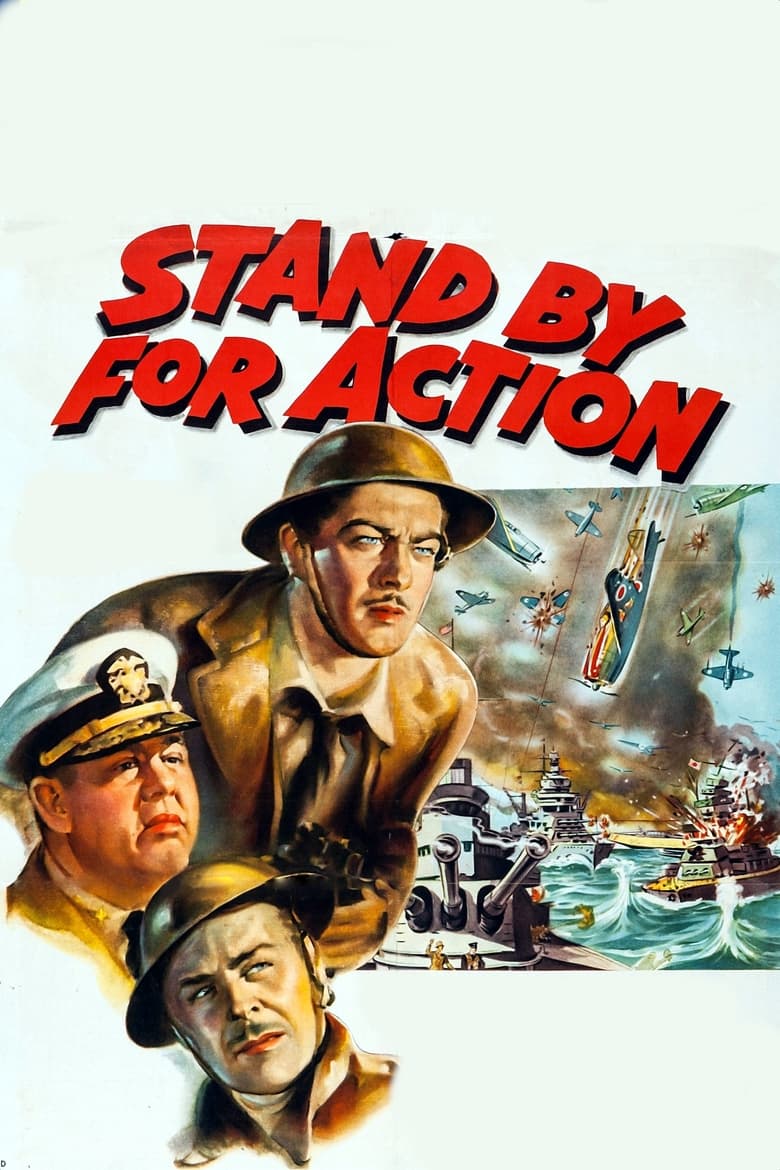
Stand by for Action
1942
NRDirector
Robert Z. Leonard
Runtime
109 minutes
Average Rating
No ratings yetSynopsis
U. S. Navy Lieutenant Gregg Masterman, of The Harvard and Boston Back Bay Mastermans, learned about the sea while winning silver cups sailing his yacht. He climbs swiftly in rank, and is now Junior Aide to Rear Admiral Stephen Thomas.
Where to Watch
Diversity & Representation
Overall Score
Minimal
Category Breakdown
LGBTQ+ Representation
The film follows standard wartime romantic archetypes. There are no visible LGBTQ+ characters or narratives that challenge heteronormativity.
Gender Representation
The story centers on male military advancement and naval rank. Agency is concentrated in male figures, reinforcing traditional patriarchal structures.
Racial & Ethnic Diversity
The narrative emphasizes Anglo-Saxon, upper-class lineage through the protagonist's heritage. It lacks evidence of racial blending or non-white agency.
Religious & Cultural Diversity
The film celebrates Western institutionalism and patriotic duty. It promotes traditional values of hierarchy and loyalty to the U.S. Navy.
Disability Representation
There is no mention of characters navigating physical or neurodivergent experiences. No data is available to assess disability representation.
Strengths
- The film provides a clear, focused look at wartime institutional loyalty and the values of the U.S. Navy.
Areas for Improvement
- The narrative lacks racial diversity, focusing instead on a homogeneous, upper-class Anglo-Saxon demographic.
- Gender representation is limited, with agency almost exclusively concentrated in male military figures.
- The film offers no visible LGBTQ+ representation or narratives that critique traditional social archetypes.
AI Analysis
Stand by for Action is a product of the 1942 studio system, prioritizing mainstream social norms over subversion. The narrative architecture is built around traditional masculine achievement and established class hierarchies. The film functions as a celebration of military order and institutional patriotism. It relies on homogeneous demographics and Western social structures typical of the era's cinema. Ultimately, the work offers minimal disruption to the prevailing social norms of the early 1940s, focusing instead on the ascent of a high-society protagonist.
Rate this Movie
Reviews
No reviews yet. Be the first to share your thoughts on this movie!
Use the rating form above to leave a star rating and optional review.