
Angus, Thongs and Perfect Snogging
2008
No user ratings available yet
Representation score: 4.9 out of 10
Representation Score
Fair
2011
PGDirector
Michael Pavone
Runtime
101 minutes
Average Rating
No ratings yetNew Showbiz Analysis
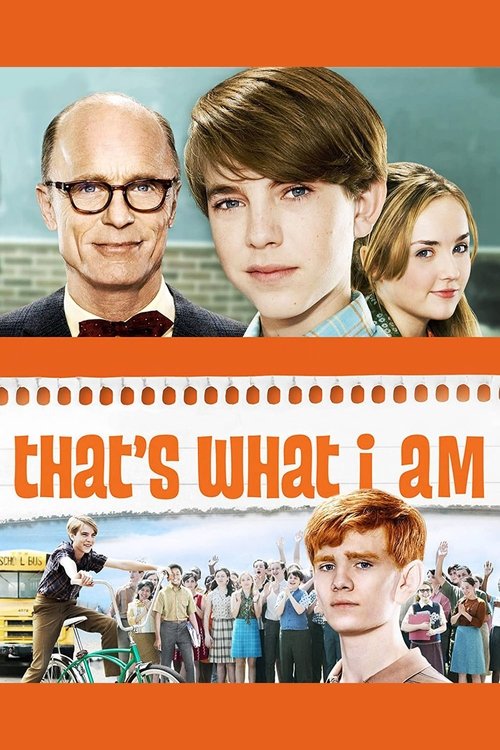
That's What I Am is a period piece that uses the social constraints of 1965 to examine the friction between individual identity and systemic pressure. The film's strength lies in its nuanced handling of LGBTQ+ themes and its critique of institutional conformity. However, its impact is limited by its narrow focus on a localized social hierarchy, which results in a lack of multi-layered breadth, particularly regarding racial diversity and the subversion of gendered power dynamics. Ultimately, the film succeeds in disrupting the era's status quo by framing traditional community values as a mechanism for exclusion rather than stability.
Category Breakdown
The film centers on rumors surrounding Mr. Simon's sexuality in a 1965 setting. It critiques the assumption that everyone is straight or cisgender through Mr. Simon's refusal to confirm or deny his identity during administrative confrontation.
The story focuses on male-dominated social dynamics, including bullying and peer pressure. It adheres to traditional mid-century hierarchies without challenging gendered power structures.
The narrative appears to focus on a homogeneous social environment typical of 1960s California suburbia. There is no explicit evidence of a multi-ethnic cast or diverse racial perspectives.
The film critiques the rigidity of mid-century Western institutions by framing communal conformity as a source of conflict. It explores the tension between individual identity and oppressive social policing.
There is no discernible evidence regarding the inclusion or portrayal of characters with visible or invisible disabilities.
Present on Screen
Limited or Absent
Official Synopsis
A coming-of-age story that follows 12-year-old Andy Nichol, a bright student who, like most kids his age, will do anything to avoid conflict for fear of suffering overwhelming ridicule and punishment from his junior high school peers.
2008

2013
2008

2011

2008
1996

2020

1980
No reviews yet. Be the first to share your thoughts on this movie!
Use the rating form above to leave a star rating and optional review.