Find another title
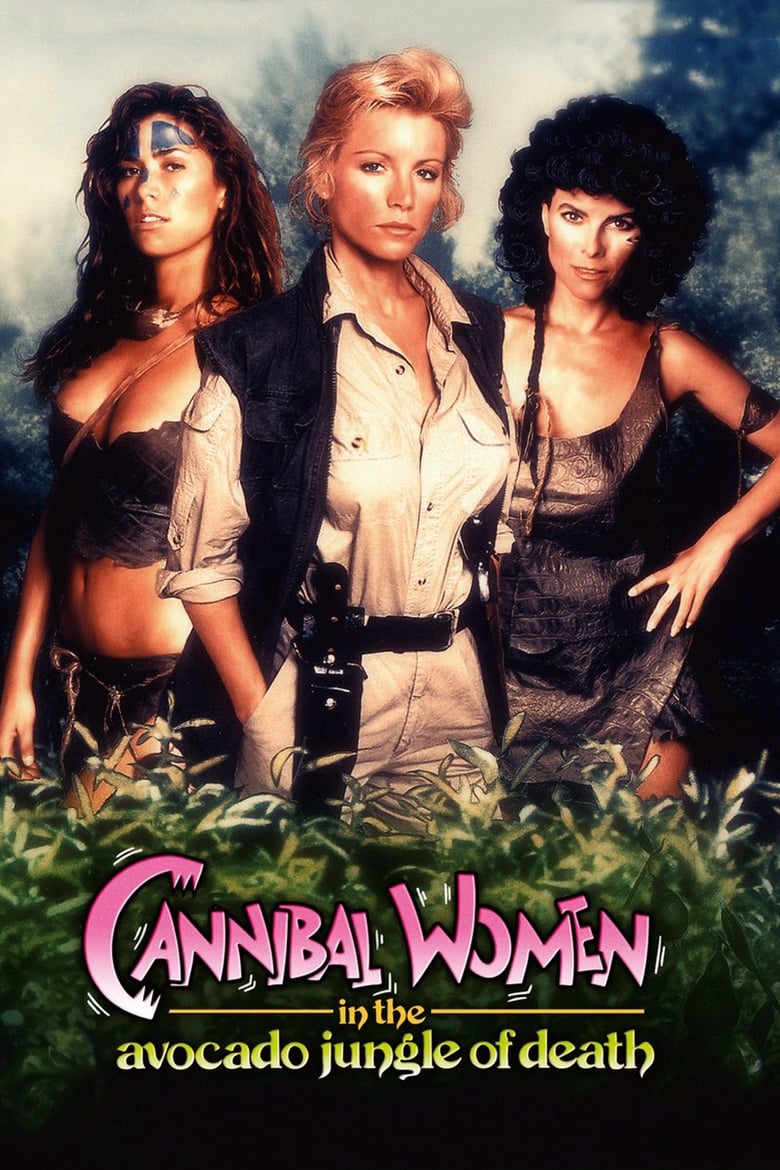
Cannibal Women in the Avocado Jungle of Death
1989
PG-13Director
J.F. Lawton
Runtime
89 minutes
Average Rating
No ratings yetSynopsis
The U.S. government, eager to protect the nation's avocado supplies, recruits feminist professor Margo Hunt to make contact with the Piranha Women, an all-female tribe who believe men are only good as a source of food. Accompanying Dr. Hunt on her trip are Jim, a guide of questionable competence, and Bunny, a student of unquestionable incompetence.
Where to Watch
Diversity & Representation
Overall Score
Limited
Category Breakdown
LGBTQ+ Representation
The film contains no discernible LGBTQ+ characters or non-cisnormative identities. Interpersonal dynamics remain strictly within traditional heteronormative frameworks.
Gender Representation
Dr. Margo Hunt provides intellectual authority, and the all-female tribe subverts traditional male protector tropes. However, the film relies on sexualization and 'women in peril' tropes.
Racial & Ethnic Diversity
The narrative utilizes a colonialist lens of discovery regarding a non-Western indigenous group. It leans toward stereotypical 'savage tribe' archetypes common in exploitation cinema.
Religious & Cultural Diversity
A subtle anti-capitalist undertone emerges through the U.S. government's obsession with commodity protection. The film lacks a deeper philosophical framework regarding secularism or systemic critique.
Disability Representation
There is no visible or intentional representation of physical, sensory, or neurodivergent disabilities within the cast or character arcs.
Strengths
- The film subverts traditional gender hierarchies by centering a dominant all-female tribe.
- Dr. Margo Hunt serves as a competent intellectual authority figure.
- The plot offers a subtle critique of Western commodity-driven institutional priorities.
Areas for Improvement
- The narrative relies heavily on colonialist 'discovery' lenses and stereotypical tribal archetypes.
- Frequent use of 'women in peril' tropes and sexualization undermines gender subversion.
- The film lacks any representation of LGBTQ+ identities or neurodivergent characters.
AI Analysis
The film operates as a transitional genre piece that attempts to challenge patriarchal structures through a matriarchal society. While it disrupts conventional gender roles regarding power, the execution remains tethered to the exploitative tropes of the late 1980s. Representation is limited by a reliance on colonialist frameworks and stereotypical portrayals of primitive societies. The narrative prioritizes genre tropes over a nuanced deconstruction of systemic power dynamics or ethnic agency. Ultimately, the work functions as a standard survivalist adventure. It offers a critique of Western institutional priorities but fails to move beyond the narrow perspectives characteristic of B-movie cinema from this era.
Rate this Movie
Reviews
No reviews yet. Be the first to share your thoughts on this movie!
Use the rating form above to leave a star rating and optional review.