Find another title
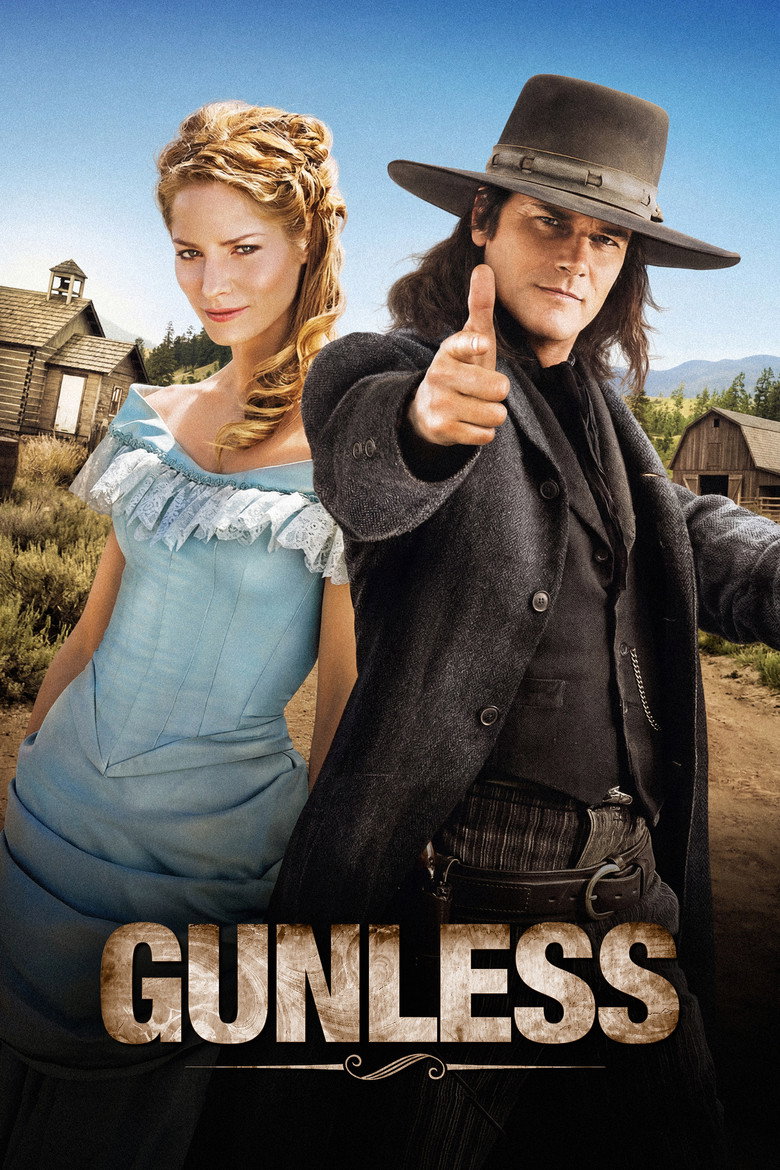
Gunless
2010
Director
William Phillips
Runtime
89 minutes
Average Rating
No ratings yetSynopsis
American gunslinger Sean Rafferty—aka The Montana Kid—is unable to find someone to duel in a Canadian town where no one understands the brutal code of the American Wild West.
Where to Watch
Diversity & Representation
Overall Score
Limited
Category Breakdown
LGBTQ+ Representation
The narrative focuses on the archetypal Western duelist. There is no explicit evidence of non-cisnormative identities or narratives designed to critique heteronormativity.
Gender Representation
The film adheres to traditional Western tropes that prioritize masculine archetypes. It lacks evidence of women occupying roles of superior intellect or subverting masculine leadership.
Racial & Ethnic Diversity
The story centers on a singular American protagonist in a Canadian town. There is no verified evidence of a non-Anglo-Saxon majority cast or race-bent casting.
Religious & Cultural Diversity
The film utilizes a clash of codes between American individualism and Canadian social structures. It functions primarily as a standard genre-based fish-out-of-water comedy.
Disability Representation
There is no information regarding the portrayal of visible or invisible disabilities in this work.
Strengths
- The film offers a clear exploration of the clash between American frontier individualism and Canadian social structures.
Areas for Improvement
- The narrative lacks intersectional complexity and fails to subvert traditional masculine or racial archetypes.
- There is a notable absence of diverse identities, including LGBTQ+ and non-Anglo-Saxon representation.
- The film relies heavily on conventional gender hierarchies and standard Western genre tropes.
AI Analysis
Gunless operates strictly within the established boundaries of the Western genre. The film relies on traditional protagonist archetypes, centering the story on the 'Montana Kid' and his struggle to find a duel. This focus on the singular gunslinger mythos limits the scope for broader social exploration. The narrative lacks intersectional complexity or systemic critique. Instead of challenging social hierarchies, the film follows a conventional approach to character agency and social dynamics, prioritizing genre tropes over progressive representation. Ultimately, the film functions as a standard comedy that explores regional customs rather than addressing deeper cultural or identity-based nuances.
Rate this Movie
Reviews
No reviews yet. Be the first to share your thoughts on this movie!
Use the rating form above to leave a star rating and optional review.