
You Have Won $9M!
2011
No user ratings available yet
Diversity score: 4.9 out of 10
2004
Not RatedDirector
Vít Klusák, Filip Remunda
Runtime
90 minutes
Average Rating
No ratings yetSynopsis
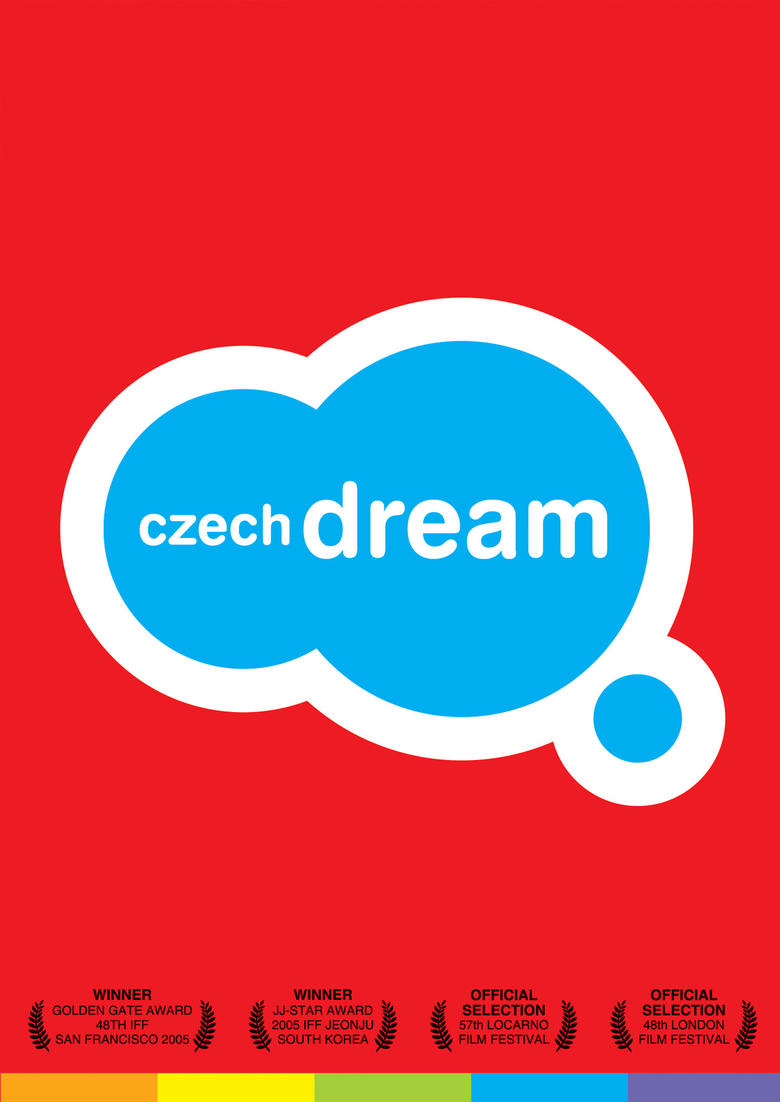
Two students from the Czech Film Academy commission a leading advertising agency to organize a huge campaign for the opening of a new supermarket named Czech Dream. The supermarket however does not exist and is not meant to. The advertising campaign includes radio and television ads, posters, flyers with photos of fake Czech Dream products, a promotional song, an internet site, and ads in newspapers and magazines. Will people believe in it and show up for the grand opening?
Overall Score
Limited
Category Breakdown
LGBTQ+ Representation
The film focuses on a specific cohort of young men and their collective ambitions. There is a notable absence of LGBTQ+ characters or narratives engaging with non-cisnormative identities.
Gender Representation
Social dynamics are heavily concentrated on male camaraderie and entrepreneurship. The film lacks female characters with significant agency, reinforcing a traditional, gender-homogeneous social structure.
Racial & Ethnic Diversity
The cast and setting are predominantly white, reflecting the specific demographic of the post-communist Czech Republic. It lacks multicultural or intersectional representation.
Religious & Cultural Diversity
The film offers a nuanced look at the transition into a capitalist economy. It portrays the friction between entrepreneurial spirit and rigid state bureaucracy.
Disability Representation
There is no discernible representation of visible or invisible disabilities. The narrative focuses entirely on the socioeconomic and psychological drives of the protagonists.
Strengths
Areas for Improvement
AI Analysis
Czech Dream functions as a localized study of national economic evolution rather than a vehicle for social deconstruction. The mockumentary framework prioritizes the tension between individual agency and institutional bureaucracy over intersectional identity politics. The narrative is built around a highly homogeneous demographic. By centering the story on a specific group of young men navigating a post-communist landscape, the film misses opportunities to engage with diverse perspectives. Ultimately, the work remains within a traditional social framework. While it successfully blurs the lines between reality and fiction, it does not actively challenge norms regarding gender, race, or sexual orientation.
No reviews yet. Be the first to share your thoughts on this movie!
Use the rating form above to leave a star rating and optional review.