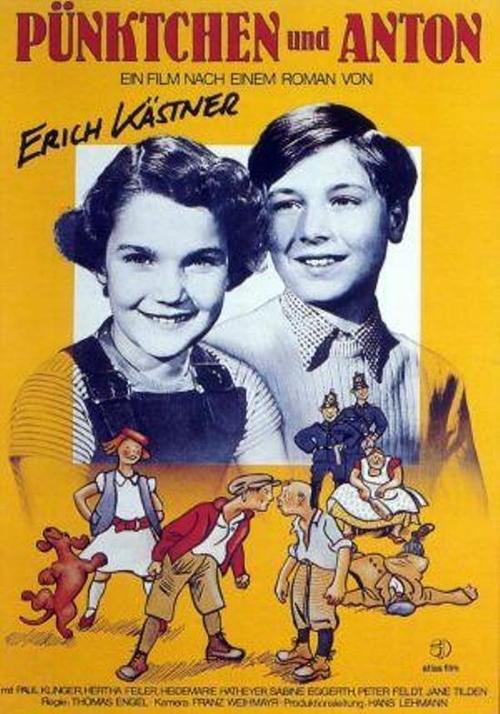
Annaluise & Anton
1953
No user ratings available yet
Representation score: 3.4 out of 10

Representation Score
Fair
1999
Director
Caroline Link
Runtime
107 minutes
Average Rating
No ratings yetNew Showbiz Analysis
Annaluise & Anton is a character-driven drama that prioritizes social stratification over demographic variety. The film explores the intersection of two disparate socioeconomic realities through the protagonists, navigating the systemic failures of their adult environments. While the film lacks representation for LGBTQ+ identities and racial diversity, it succeeds in offering a nuanced critique of class. It avoids presenting the upper class as an aspirational standard, instead highlighting the emotional dysfunction within wealthy households. Ultimately, the film's strength lies in its exploration of ability to act and class mobility, even as it remains limited by a homogeneous cast and a reliance on illness as a narrative catalyst.
Category Breakdown
The film does not include any LGBTQ+ characters or themes. The story focuses on the friendship between the children and the daily struggles of their families.
Pünktchen takes a leading role by starting her own economic efforts to help Anton. The film challenges the traditional idea of a nurturing mother by showing a mother focused on social performance rather than care.
The story reflects a relatively homogeneous social environment. There is no evidence of diverse casting or intentional racial blending within this specific setting.
The narrative critiques class hierarchies and institutional stability. It portrays both wealthy and working-class families as flawed, emphasizing situational morality over idealized Western domestic success.
Anton’s mother is shown with an illness that drives the family's economic hardships. It is unclear if this portrayal provides depth or serves mainly as a plot device.
Present on Screen
Limited or Absent
Official Synopsis
Luise, called Pünktchen, and Anton are closest of friends. Being the daughter of a wealthy surgeon, young Pünktchen lives in a great house. Her mother, who always travels through the world more for public relation reasons than for the social tasks she pretends to fulfill, is never available to her as a mother. Anton, son of a single and sick mother in financial trouble, does his best to help her out of it by working late. Pünktchen decides to help her only friend (as nobody else would anyway) and starts singing in public places. Trouble arises when Anton can't resist stealing a golden lighter and Pünktchen's secret life is discovered by her parents. Two troubled families finally can see the need for actions to be taken.
1953

1994

2006

1999

2011

2004
2005

1997
No reviews yet. Be the first to share your thoughts on this movie!
Use the rating form above to leave a star rating and optional review.