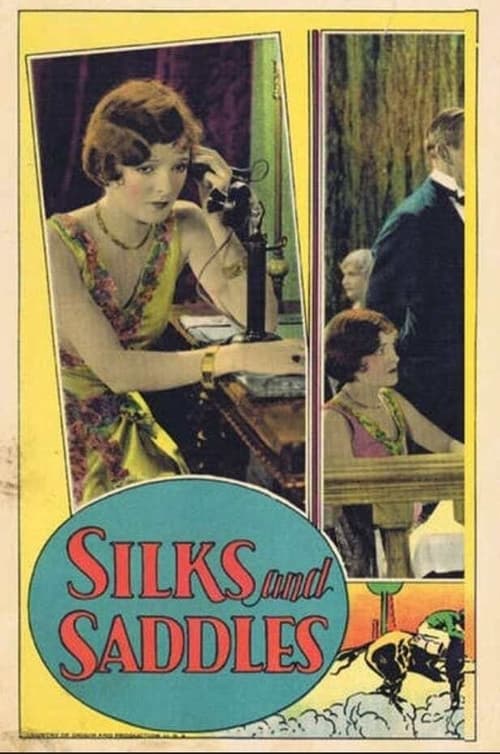
Silks and Saddles
1929
No user ratings available yet
Representation score: 1.3 out of 10

Representation Score
Minimal
1939
Director
Reginald Denham
Runtime
68 minutes
Average Rating
No ratings yetNew Showbiz Analysis
Flying Fifty-Five is a product of its era, functioning as a traditional period drama that adheres to 1930s social and narrative conventions. While it offers a slight subversion of gender roles by centering a female business owner, the story ultimately seeks to restore established social and economic hierarchies. The film lacks meaningful diversity in terms of race, culture, or sexual orientation. It presents a localized, homogeneous view of British society, focusing on class mobility and romantic union within a standard Western framework. Ultimately, the film's structure prioritizes the restoration of solvency and status, reinforcing the very institutions it depicts rather than critiquing them.
Category Breakdown
The film follows a conventional romantic storyline centered around the male protagonist and Stella Barrington. There is no evidence of non-straight relationships or same-sex intimacy.
Stella Barrington stands out by holding economic power as a stable owner. However, her character is defined by financial struggles and debt.
The setting appears uniform, focusing on the localized social structure of the British racing circuit. There is no indication of a multi-ethnic cast.
The narrative reinforces traditional Western structures and social hierarchies. It emphasizes individual merit, class mobility, and the restoration of economic order.
The film provides no information regarding the depiction of physical or neurodivergent characters.
Present on Screen
Limited or Absent
Official Synopsis
Bill Urquhart, a young wastrel disinherited by his father, tries to get a job as a jockey – just about the only thing he’s really good at. His name and position work against him, however, so he adopts an alias and prevails upon the charity of a drunken friend Charles Barrington, through whom he meets Stella Barrington - who has not only inherited her father’s racing stables but also his debts. Still incognito, he takes on the job of stable lad for Stella but little does she realise that he could be the man to finally put an end to her money worries forever.
1929
1945
1930
1936
1926
1954
1938
1939
No reviews yet. Be the first to share your thoughts on this movie!
Use the rating form above to leave a star rating and optional review.