Find another title
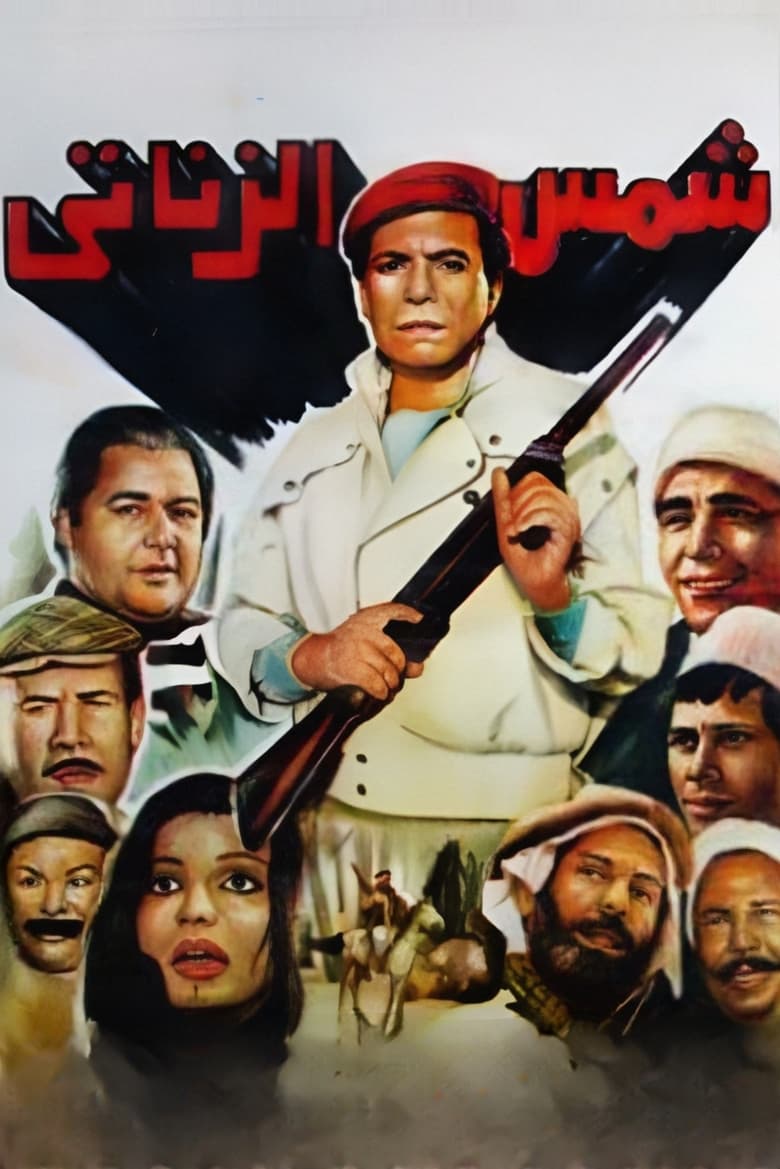
Shams El Zanaty
1991
Director
Samir Seif
Runtime
130 minutes
Average Rating
No ratings yetSynopsis
During World War II, a tribal chief travels to Cairo to buy weapons. He asks for Shams Al Zanati's help to protect his oasis from Marshal Bar'i.
Where to Watch
Diversity & Representation
Overall Score
Fair
Category Breakdown
LGBTQ+ Representation
The film lacks identifiable LGBTQ+ characters or narratives. The social fabric remains centered on traditional communal structures.
Gender Representation
Female characters are integrated into the village but primarily occupy conventional roles. Central agency and leadership are driven by male protagonists, reinforcing traditional masculine archetypes.
Racial & Ethnic Diversity
The film presents a culturally homogenous Egyptian cast. This centers a specific ethnic identity and disrupts the Western gaze by making the local population the story's primary driver.
Religious & Cultural Diversity
The narrative critiques wealth concentration and class-based oppression. It frames collective robbery as a tool for social justice and the redistribution of resources within the community.
Disability Representation
There are no prominent depictions of physical or neurodivergent disabilities used as central plot devices or character traits.
Strengths
- Strong critique of socioeconomic stratification and class-based oppression.
- Effective disruption of the Western gaze through a localized Egyptian perspective.
- Empowers the oppressed by framing collective action as a tool for social justice.
Areas for Improvement
- Reinforces traditional gender hierarchies and masculine archetypes of leadership.
- Lacks representation of LGBTQ+ identities or non-heteronormative narratives.
- Does not feature characters with physical or neurodivergent disabilities.
AI Analysis
Shams El Zanaty is a social satire that prioritizes the agency of the marginalized over established legal hierarchies. It succeeds in providing a narrative space where Egyptian rural life and local struggles drive the moral conflict, effectively challenging Western-centric perspectives. However, the film remains tethered to traditional social structures. The leadership dynamics are heavily gendered, and the lack of LGBTQ+ representation reflects a narrow social scope. While it excels in socioeconomic critique, it does not expand its scope to include diverse identities beyond the central ethnic group.
Rate this Movie
Reviews
No reviews yet. Be the first to share your thoughts on this movie!
Use the rating form above to leave a star rating and optional review.