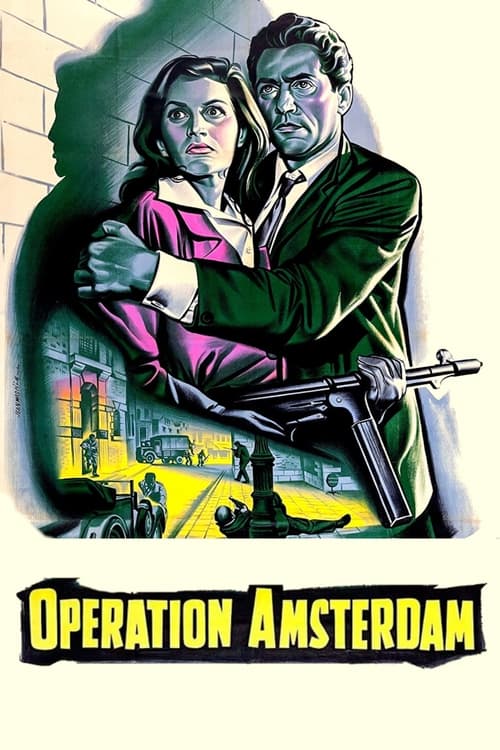
Operation Amsterdam
1959
No user ratings available yet
Representation score: 2.3 out of 10

Representation Score
Limited
2009
Not RatedDirector
Paul Breuls
Runtime
108 minutes
Average Rating
No ratings yetNew Showbiz Analysis
The Hessen Affair operates as a conventional period noir, prioritizing historical heist clichés and romantic tension over social commentary. The narrative centers on a heterosexual duo navigating the aftermath of World War II, adhering to established genre expectations. While the film includes a female officer as a central character, it does not actively challenge traditional gender hierarchies. The focus remains on the personal stakes of the theft rather than broader social issues. Ultimately, the film reflects the demographic limitations of its 1945 setting, presenting a standard Western perspective without multi-layered depth.
Category Breakdown
The story revolves around a romantic relationship between two American officers, which follows a traditional structure without exploring non-binary or transgender identities.
A female officer is a central protagonist alongside her male partner. She drives the plot, but her role is tied to traditional noir genre clichés.
The cast and setting reflect a predominantly Western, Anglo-American, and European demographic. The film does not use diverse casting to challenge the 1945 historical context.
The narrative prioritizes a heist thriller framework, focusing on individual greed and personal loyalty rather than broader cultural or institutional oppression.
There is no evidence of characters with physical or neurodivergent disabilities within the film's plot or character descriptions.
Present on Screen
Limited or Absent
Official Synopsis
In 1945 a group of victorious American officers discover a stash of German jewels and try to fence them in New York.
1959

1951

2006
2019

2014
1969

1967

2014
No reviews yet. Be the first to share your thoughts on this movie!
Use the rating form above to leave a star rating and optional review.