
What's Love Got to Do with It
1993
No user ratings available yet
Representation score: 4.6 out of 10
Representation Score
Fair
1996
PGDirector
Alan Parker
Runtime
135 minutes
Average Rating
No ratings yetNew Showbiz Analysis
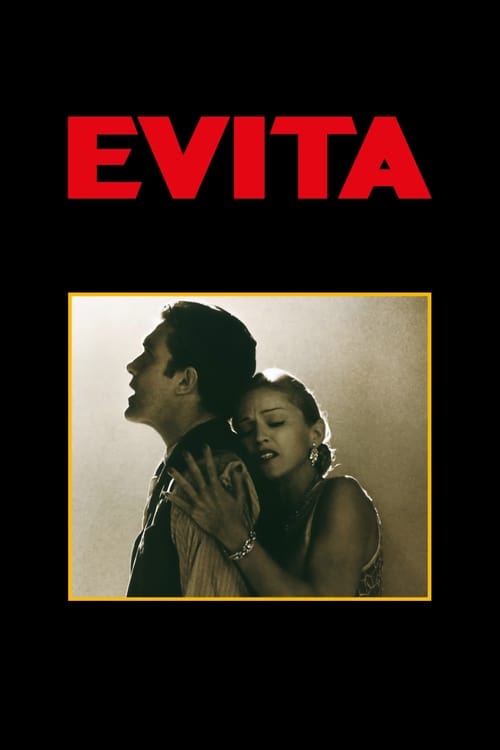
Evita is a sophisticated deconstruction of class and gender hierarchies. It succeeds by presenting a female protagonist who challenges the patriarchal limitations of her era, using her ability to act to drive the political narrative. The film's strength lies in its cultural critique, employing postmodern techniques to challenge established socioeconomic structures and the 'great man' theory of history. It avoids simple moral binaries, opting for a complex view of power. However, the film is limited by a lack of LGBTQ+ and disability representation. The reliance on a non-local lead actress also introduces a tension regarding ethnic authenticity and the prioritization of celebrity over local identity.
Category Breakdown
The film follows a strictly straight-centered framework focused on the romantic and political union of Eva and Juan Perón. It lacks significant presence of non-assuming gender matches what was assigned at birth identities or narratives that critique traditional gender norms.
Eva Perón is depicted with immense ability to act, using her intellect and charisma to navigate male-dominated institutions. The film portrays the rigid masculinity of the oligarchy as stagnant compared to her populist mobilization.
Casting an American actress as a national Argentinian icon creates tension between star power and ethnic authenticity. However, the film effectively depicts the socioeconomic and ethnic stratification within Argentina.
The narrative uses a cynical narrator to deconstruct the sanctity of the state and traditional history. It frames the upper class as an oppressive force through a strong anti-oligarchy lens.
The film does not feature characters with visible or invisible disabilities. Disability is not utilized as a narrative device within the story.
Present on Screen
Limited or Absent
Official Synopsis
The hit musical based on the life of Evita Duarte, an Argentinian actress who eventually became the wife of Argentinian president Juan Perón, and the most beloved and hated woman in Argentina.
1993
1969

2022

1942

2019

2016

2019
2004
No reviews yet. Be the first to share your thoughts on this movie!
Use the rating form above to leave a star rating and optional review.