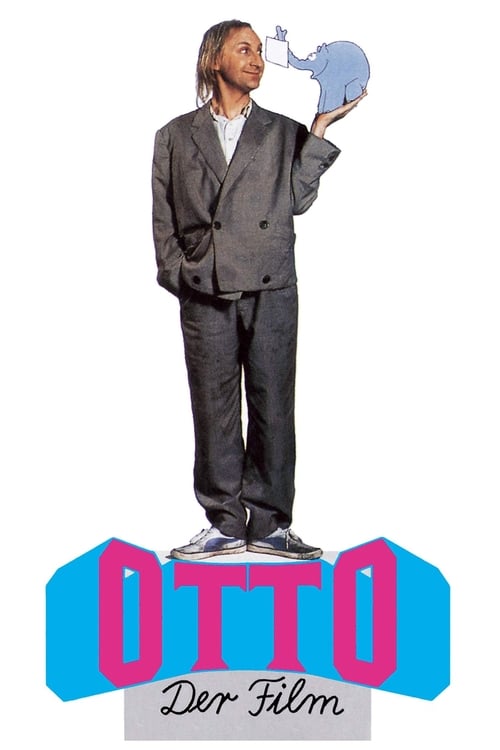
Otto - The Movie
1985
No user ratings available yet
Representation score: 3.1 out of 10

Representation Score
Fair
1992
Director
Sönke Wortmann
Runtime
87 minutes
Average Rating
No ratings yetNew Showbiz Analysis
Little Sharks is a character study of social outsiders navigating economic instability. It avoids idealized Western structures, focusing instead on the struggles of unsuccessful, transient protagonists. The film lacks complexity in representing multiple aspects of identity. While it disrupts social homogeneity through characters like Ali, it remains anchored in the social dynamics of the early 1990s. Ultimately, the work finds its voice in the disruption of traditional stability rather than through diverse representation of identity groups.
Category Breakdown
The film focuses on heterosexual relationships, such as Johannes's interest in Herta. There is no evidence of queer identities or non-traditional gender expressions.
The story centers around male friendships and shared hardships. Female characters like Herta are mainly defined by their relationships to the male leads.
Ali's appearance at a roadside diner introduces ethnic diversity. His presence breaks the uniformity of the Autobahn setting, although his character is not deeply explored.
The story challenges middle-class stability by focusing on broke, transient characters. It highlights the lived experiences of underrepresented individuals over idealized capitalist success.
There is no evidence regarding the portrayal of physical or neurodivergent disabilities within the narrative.
Present on Screen
Limited or Absent
Official Synopsis
When dishwasher Ingo, whose girl-friend has just left him, returns a borrowed bar stool to the Folkwang Acting School in Essen, he stumbles into the audition for next year's new students. He lets Johannes, the broke and unsuccessful applicant, stay with him. Ingo decides to go to Munich with Johannes, where he wants to try his luck once again. Hitchhiking, they get rides with very different drivers on the autobahn. They meet up with the smooth-talking Ali in the wayside dinner "Raststätte Spessart". Arriving in Munich, the trio tries to find cheap sleeping accommodation. They enter Ingo into the audition at Munich acting school. Moreover, Johannes falls in love with street artist Herta from Berlin. Written by emkarpf
1985

2000
1983

1978
1998
1999

1984

1991
No reviews yet. Be the first to share your thoughts on this movie!
Use the rating form above to leave a star rating and optional review.