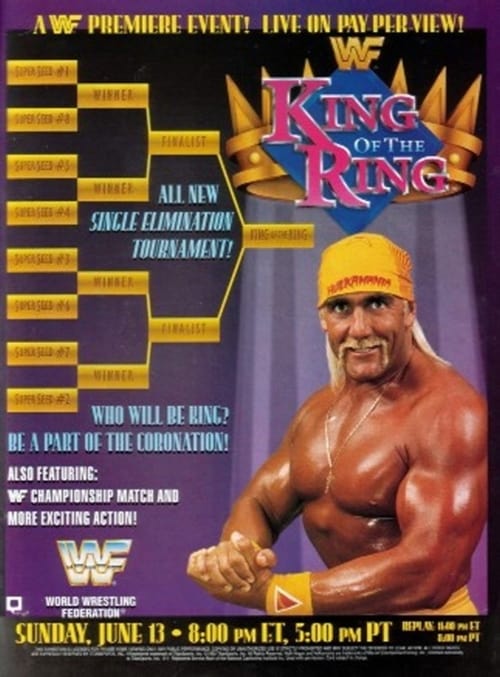
WWE King of the Ring 1993
1993
No user ratings available yet
Diversity score: 1.6 out of 10
1995
Director
Vince McMahon
Runtime
156 minutes
Average Rating
No ratings yetSynopsis
King of the Ring (1995) was the third annual King of the Ring. It took place on June 25, 1995 at the CoreStates Spectrum in Philadelphia, Pennsylvania. The main event was a tag team match in which WWF Champion Diesel and Bam Bam Bigelow faced Tatanka and Sycho Sid. The main matches on the undercard were Bret Hart versus Jerry Lawler in a "Kiss My Foot" match and the King of the Ring Final.
Overall Score
Limited
Category Breakdown
LGBTQ+ Representation
The broadcast operates within a hyper-masculine framework. There is a notable absence of LGBTQ+ characters or narratives exploring non-cisnormative identities.
Gender Representation
The narrative architecture is almost exclusively centered on male physicality. The event lacks female agency, as tournament structures are designed for and by male performers.
Racial & Ethnic Diversity
The roster includes diverse performers like Tatanka, though representation often leans toward established ethnic tropes. While non-white athletes are present, they lack complex, intersectional identities.
Religious & Cultural Diversity
The event promotes a singular, competitive morality centered on physical dominance. It upholds traditional values of athletic heroism and Western capitalist entertainment interests.
Disability Representation
There is no evidence of characters with disabilities being portrayed with agency. Physicality is treated as spectacle rather than exploring neurodivergence or chronic illness.
Strengths
Areas for Improvement
AI Analysis
King of the Ring 1995 functions as a closed system of hyper-masculine competition. The production prioritizes commercial spectacle and established archetypes over progressive narrative complexity or intersectional depth. The event reinforces traditional hierarchies, particularly through the exclusion of female agency and queer visibility. The focus remains strictly on male-driven tournament structures and physical dominance. While racial diversity exists through performers like Tatanka, it often relies on era-specific ethnic motifs. This limits the depth of representation, favoring archetypes over nuanced, modern identities.
1993
1996
1998
1999
1999
1991
1999
1998
1995
2001
1999
1993
No reviews yet. Be the first to share your thoughts on this movie!
Use the rating form above to leave a star rating and optional review.