Find another title
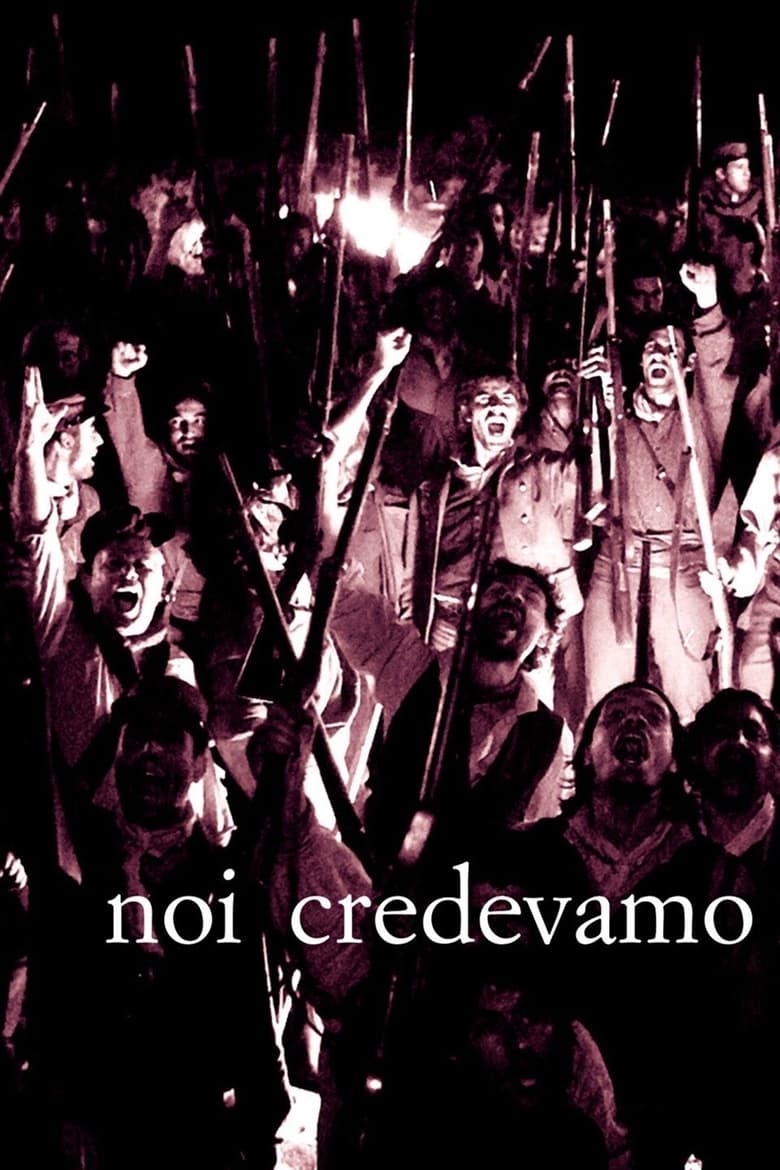
We Believed
2010
Director
Mario Martone
Runtime
170 minutes
Average Rating
No ratings yetSynopsis
1828. In the wake of the repression of revolutionary movements in Southern Italy, three young friends join Giuseppe Mazzini's republican and unificationist cause. Their idealism will clash with the inevitable disillusionment as they grow apart over the decades.
Where to Watch
Diversity & Representation
Overall Score
Fair
Category Breakdown
LGBTQ+ Representation
The film focuses on masculine-coded revolutionary brotherhoods. It lacks explicit non-heteronormative identity markers or queer romantic arcs within the primary narrative.
Gender Representation
The story centers heavily on the male experience of political upheaval. However, it avoids traditional tropes by portraying masculinity through vulnerability and disillusionment rather than monolithic strength.
Racial & Ethnic Diversity
Set in 1828 Italy, the cast and setting are predominantly homogeneous. The film reflects the localized nature of the Italian unification movement with little racial intersectionality.
Religious & Cultural Diversity
The narrative excels at critiquing traditional institutions and monarchical hierarchies. It prioritizes a republican vision of society over religious or monarchical structures.
Disability Representation
There are no prominent depictions of visible or invisible disabilities that drive the narrative or serve as central character arcs.
Strengths
- Effective critique of traditional monarchical and state power structures.
- Nuanced portrayal of masculinity through vulnerability and failure.
- Sophisticated exploration of the corruption inherent in systemic power.
Areas for Improvement
- Lack of explicit LGBTQ+ identity markers or queer romantic arcs.
- Limited racial and ethnic diversity within the historical setting.
- Heavy narrative centering on the male political experience.
AI Analysis
Mario Martone’s historical drama offers a sophisticated deconstruction of the Risorgimento. Rather than presenting a romanticized version of revolution, the film explores the inevitable disillusionment and systemic complexities of nation-building. The film succeeds in its thematic critique of established power structures, challenging the stability of the old world order. It moves beyond simple heroism to examine the moral friction between individual idealism and political reality. However, the work is limited by its demographic homogeneity. The focus on 19th-century Italian nationalism results in a lack of racial diversity and queer representation, keeping the perspective largely localized to the era's specific social constraints.
Rate this Movie
Reviews
No reviews yet. Be the first to share your thoughts on this movie!
Use the rating form above to leave a star rating and optional review.