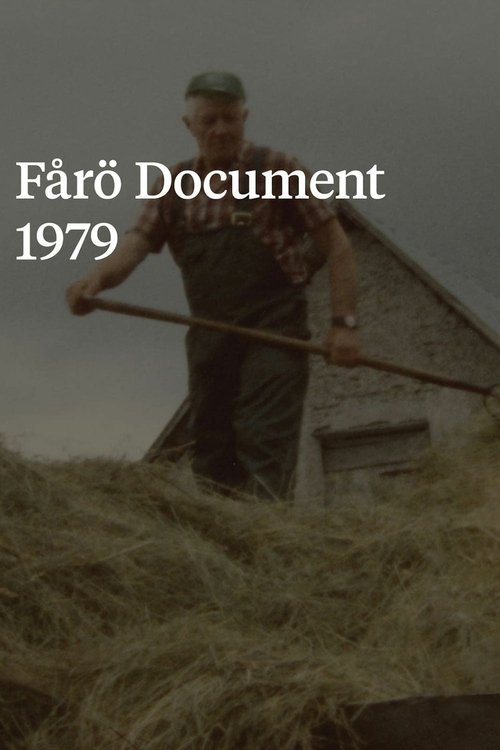
Fårö Document 1979
1979
No user ratings available yet
Diversity score: 2.8 out of 10
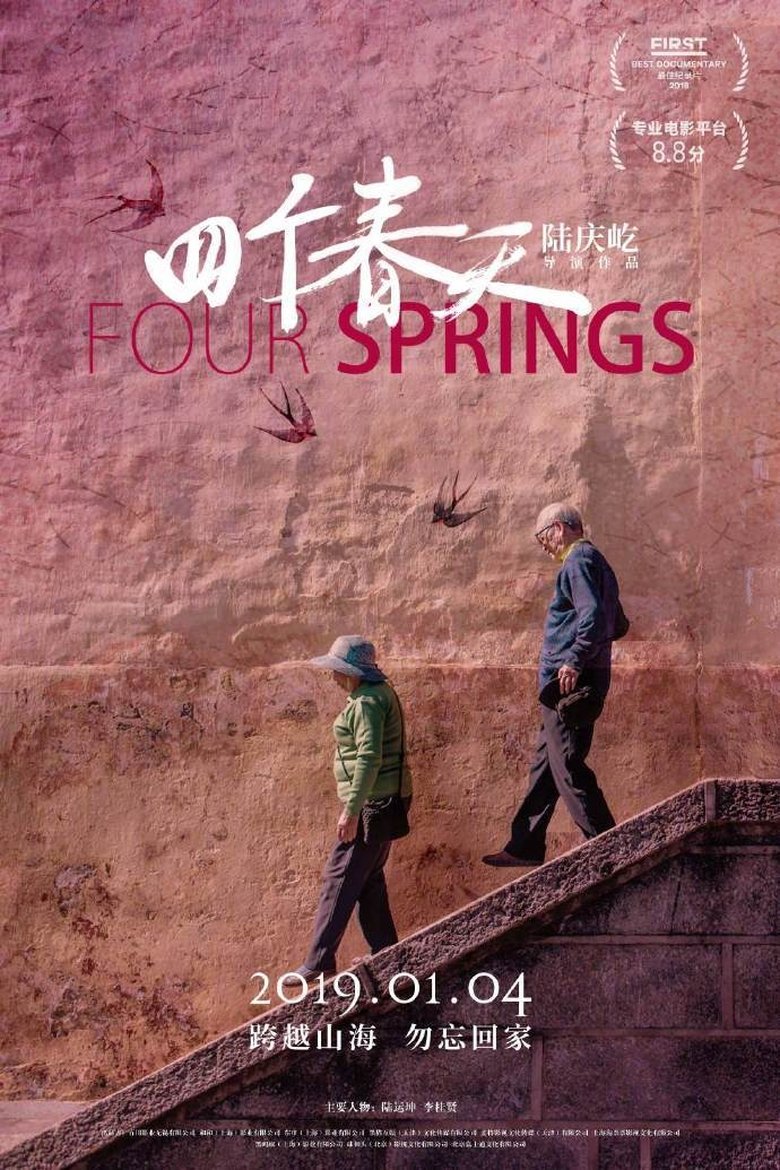
2019
NRDirector
Lu Qingyi
Runtime
105 minutes
Average Rating
No ratings yetSynopsis
Four Springs is a documentary film that presented a family's daily life in the remote town of Dushan in the Guizhou province in southwest China. From a subjective angle, the camera induced the flow of life out of the screen: the quotidian toils, singing, excursions in nature, visits among friends and extended families, funerals, reunions and departures. It presented the state of being of the two main characters, the director's own parents, and their attitude when facing irretrievable loss in life.
Overall Score
Good
Category Breakdown
LGBTQ+ Representation
The film observes traditional familial structures within a rural Chinese community. It maintains a neutral stance, neither critiquing nor actively promoting heteronormativity through its non-judgmental gaze.
Gender Representation
Women are portrayed as essential, active participants in family survival rather than submissive tropes. The film provides visibility to domestic and agricultural labor often ignored in mainstream cinema.
Racial & Ethnic Diversity
The narrative centers a non-Western, non-urban perspective by focusing on the Guizhou province. Subjects are presented as primary architects of their own worlds rather than being viewed through a colonial lens.
Religious & Cultural Diversity
Spirituality is depicted as a localized phenomenon tied to nature and ancestry. The film explores life's cyclical nature through rituals like funerals and reunions without promoting institutional dogma.
Disability Representation
There is no specific evidence regarding the depiction of physical or neurodivergent disabilities in the film.
Strengths
Areas for Improvement
AI Analysis
Four Springs succeeds as a meditative study of rural existence, disrupting Western-centric storytelling by centering the lived experiences of a family in Guizhou. It avoids the spectacle of external conflict, opting instead for a dignified portrait of daily labor and communal ritual. The film's strength lies in its refusal to 'other' its subjects. By focusing on the director's parents, it provides a complex look at human resilience and the quiet dignity found in provincial life. However, the film operates within existing social hierarchies and does not explicitly engage with modern identity politics or non-cisnormative identities. It remains a neutral observer of the established social fabric.
No reviews yet. Be the first to share your thoughts on this movie!
Use the rating form above to leave a star rating and optional review.