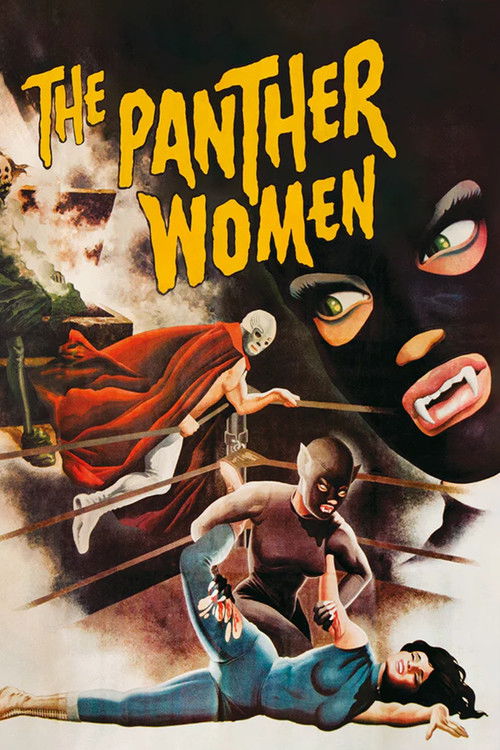
The Panther Women
1967
No user ratings available yet
Representation score: 3.6 out of 10
Representation Score
Fair
1964
Director
René Cardona
Runtime
89 minutes
Average Rating
No ratings yetNew Showbiz Analysis
The film stands out for its subversion of 1960s gender norms by placing female wrestlers in positions of physical power and ability to act. By centering the plot on Mexican cultural icons and Aztec mythology, it offers a richly non-Western perspective that avoids the era's common tendency toward whitewashing. However, the film remains limited by the era's social constraints, offering no explicit LGBTQ+ narratives or diverse portrayals of physical or neurodivergent disabilities.
Category Breakdown
The film centers on the professional relationship between Gloria Venus and Golden Rubi but does not depict same-sex intimacy or non-straight identities.
The story challenges traditional gender roles by focusing on female wrestlers who take active roles and drive the plot.
The production avoids whitewashing by emphasizing Mexican identity and Aztec mythology. Characters like the Aztec Mummy highlight indigenous themes central to the plot.
The narrative prioritizes local folklore and non-Western supernatural elements. Heroism is defined by cultural archetypes rather than typical Western religious beliefs.
Characters are defined by their physical athleticism, with no significant portrayal of neurodivergent or physical disabilities.
Present on Screen
Limited or Absent
Official Synopsis
Gloria Venus and Golden Rubi are tag-team Luchadoras, helping a scientist on a quest to discover an ancient Aztec treasure, but the fiendish Prince Fugiyata wants to get there first. Both are in for a surprise, as the treasure is guarded by Xochitl, the Aztec Mummy Sorcerer, who can turn into a bat at will.
1967
1969
1957
1977
1968
1973

1974
1968
No reviews yet. Be the first to share your thoughts on this movie!
Use the rating form above to leave a star rating and optional review.