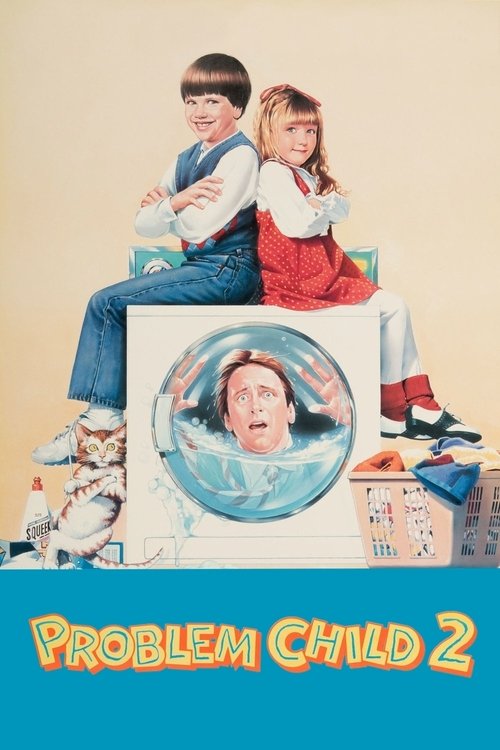
Problem Child 2
1991
No user ratings available yet
Representation score: 0.6 out of 10

Representation Score
Minimal
1995
TV-PGDirector
Greg Beeman
Runtime
87 minutes
Average Rating
No ratings yetNew Showbiz Analysis
Problem Child 3 operates as a traditional, conservative domestic comedy. It relies on established comedic clichés and a homogeneous demographic profile that reinforces existing social and cultural hierarchies rather than challenging them. The film's narrative structure is built around mainstream, conventional frameworks. It lacks intentionality regarding diverse representation, focusing instead on slapstick humor within a standard social order. Ultimately, the work presents a narrow view of suburban life, offering little in the way of diverse identities or progressive social deconstruction.
Category Breakdown
The film does not include any representation of LGBTQ+ identities or non-straight relationships. Romantic interests and social dynamics are strictly centered around heterosexual pairings.
Female characters like Trudy are primarily defined by their relationships to male leads. While the film challenges the nurturing stepmother archetype, it does so through slapstick humor rather than addressing underlying social issues.
The cast is predominantly white and middle-class. There is a notable absence of racial or ethnic diversity within the suburban setting.
The narrative adheres to conventional social norms without engaging in critiques of Western institutions. Chaos is used as comedic friction rather than a deconstruction of religion or capitalism.
There are no visible or invisible disabilities portrayed. The plot does not engage with neurodivergence or physical disability.
Present on Screen
Limited or Absent
Official Synopsis
Now a pre-teen, Junior has fallen head over heels for a classmate who doesn't even notice him, but does notice three other boys – a child star, a hockey player and a Boy Scout – who are rivals to Junior. This means war!
1991

2008
1990

2006
2010
2008
1998

1988
No reviews yet. Be the first to share your thoughts on this movie!
Use the rating form above to leave a star rating and optional review.