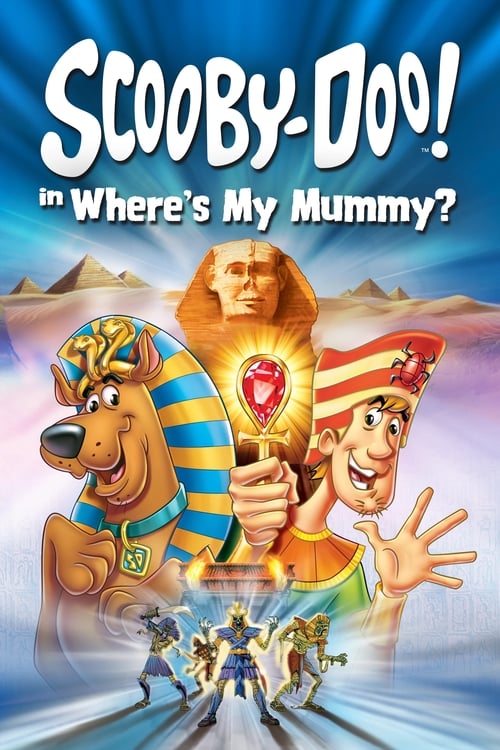
Scooby-Doo! in Where's My Mummy?
2005
No user ratings available yet
Representation score: 1.1 out of 10

Representation Score
Limited
2008
Not RatedDirector
Joe Sichta
Runtime
75 minutes
Average Rating
No ratings yetNew Showbiz Analysis
Scooby-Doo! and the Goblin King is a conservative entry that prioritizes franchise familiarity over social innovation. It relies on the established Mystery Inc. dynamic, offering a stable experience that avoids challenging identity-based hierarchies. The narrative focuses on the 'appearance vs. reality' cliché, providing psychological depth through the misunderstood Goblin King. However, this depth does not translate into a progressive disruption of systemic social norms or storytelling that reflects multiple aspects of identity. Ultimately, the film functions as a traditional genre piece. It succeeds in maintaining character's ability to drive the story for its female lead but remains within the safe, predictable parameters of family-oriented fantasy.
Category Breakdown
The film does not include any LGBTQ+ identities or narratives that challenge traditional social structures.
Velma serves as the group's intellectual leader, subverting the damsel in distress cliché. However, the film does not actively seek to dismantle traditional gender hierarchies.
The cast is largely homogeneous, following established franchise archetypes. Fantasy creatures provide visual variety but function as genre clichés rather than metaphors for ethnic diversity.
The story operates within a standard Western fantasy framework. It focuses on a binary morality between the protagonists and Krudsky rather than systemic cultural critiques.
There is no discernible representation of physical, sensory, or neurodivergent disabilities. Characters are depicted through standard animated archetypes without specific disability-focused arcs.
Present on Screen
Limited or Absent
Official Synopsis
Scooby-Doo and Shaggy must go into the underworld ruled by The Goblin King in order to stop a mortal named The Amazing Krudsky who wants power and is a threat to their pals: Fred, Velma, and Daphne.
2005
2003
2021
2004
2012
2007
2018
2006
No reviews yet. Be the first to share your thoughts on this movie!
Use the rating form above to leave a star rating and optional review.