
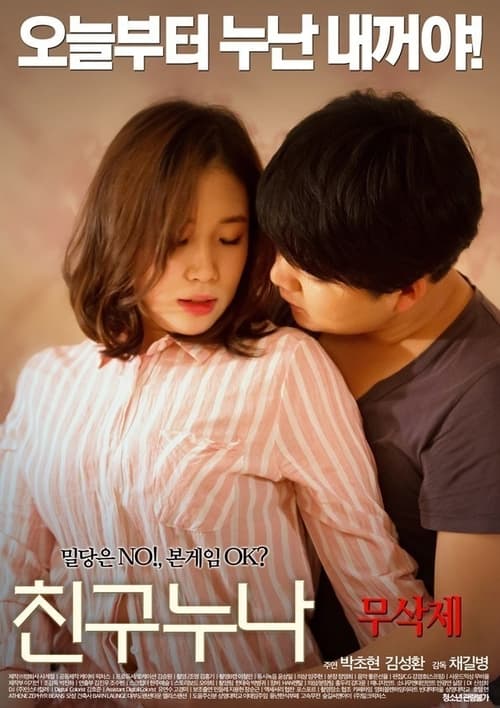
Youthful Older Sister
2018
No user ratings available yet
Representation score: 4.2 out of 10
Representation Score
Good
2016
Director
Chae Gil-byeong
Runtime
96 minutes
Average Rating
No ratings yetNew Showbiz Analysis
Chae Gil-byeong’s film is a nuanced examination of gendered power imbalances and social structures. It goes beyond typical romantic tension to explore how women navigate precarious environments and systemic aggression. The film effectively challenges traditional gender hierarchies and the dominance of male authority. It uses a localized setting to highlight the difficulties of seeking justice within established frameworks. However, the film’s demographic focus is limited. The lack of LGBTQ+ representation and the homogeneous ethnic cast restrict its diversity profile to a specific audience.
Category Breakdown
The film does not include any explicit LGBTQ+ characters or non-straight relationships. The story focuses on traditional interpersonal dynamics without queer representation.
The film emphasizes female subjectivity and psychological experiences. It challenges male dominance by exploring sexual harassment and the role of bystanders in systemic aggression.
The production features an all-Korean cast, reflecting a homogeneous demographic. While it provides localized cultural depth, it lacks diverse racial representation.
The story critiques social institutions and the silence imposed by community norms. It portrays traditional social cohesion as a mechanism that can protect those who commit wrongdoings.
There are no characters with visible or invisible disabilities in the film. The narrative centers on social pressures rather than neurodivergence or physical disabilities.
Present on Screen
Limited or Absent
Official Synopsis
Joon-soo learns that his friend Hee-gyu's sister Hee-jin has no where to go after being scammed, so he suggests living with him. The two start living together. They are close like brother and sister but they can never be that. The two start getting funny and Joon-soo can't go to sleep at the thought of Hee-jin sleeping just a wall away from him. Mi-na, Joon-soo's girlfriend notices Joon-soo changing and seduces Joon-soo at his house where Hee-jin is. Is it the girlfriend or the sister?
2018

2012

2015

2004

2018

2019

2017
2017
No reviews yet. Be the first to share your thoughts on this movie!
Use the rating form above to leave a star rating and optional review.