Les Nuls : La Pub
1992
No user ratings available yet
Representation score: 3.8 out of 10
Representation Score
Limited
1983
Director
Jean-Pierre Jeunet
Runtime
5 minutes
Average Rating
No ratings yetNew Showbiz Analysis
Jean-Pierre Jeunet's early short film serves primarily as a surrealist comedy rather than a platform for diverse representation. While the film stands out for its artistic innovation, it lacks explicit demographic complexity. The narrative emphasizes eccentricity and individual perspective over social diversity, resulting in a baseline score.
Category Breakdown
The film does not include any explicit depictions of same-sex relationships or non-cisgender identities. It also does not feature any characters who identify as LGBTQ+ or critique the assumption that everyone is straight.
The story centers around a male character named Billy Brakko. There is no mention of female characters or roles that challenge traditional gender norms.
The synopsis does not provide any information about the racial makeup of the cast. The score assumes a typical European production context from the 1980s.
The film explores themes of postmodernism and subjective reality. Its surrealist comedy style may use absurdity to subtly critique societal structures and traditional stability.
There is no indication of characters with visible or invisible disabilities in the available records.
Present on Screen
Limited or Absent
Official Synopsis
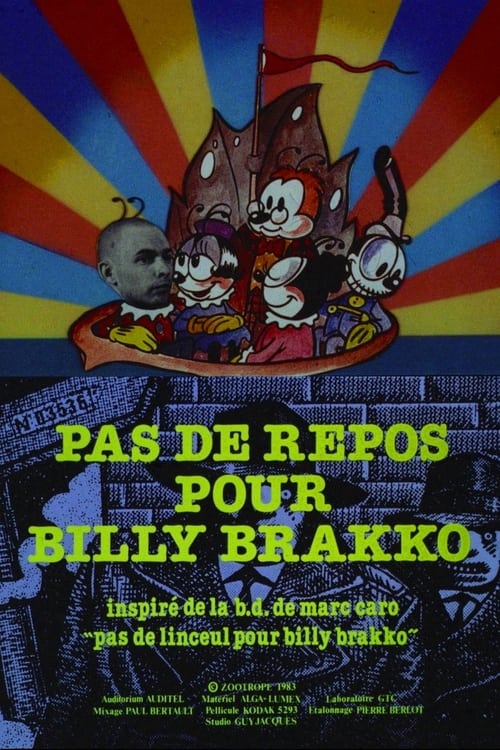
On a winter evening Billy Brakko buys a paper and reads: "The famous Billy Brakko is dead!" An early short film from Jean-Pierre Jeunet and Marc Caro.
1992
1965
1989
1979
2011
1982
1973
1990
No reviews yet. Be the first to share your thoughts on this movie!
Use the rating form above to leave a star rating and optional review.