The Bandit
1969
No user ratings available yet
Representation score: 4.3 out of 10
Representation Score
Fair
1968
GDirector
Steve Sekely
Runtime
92 minutes
Average Rating
No ratings yetNew Showbiz Analysis
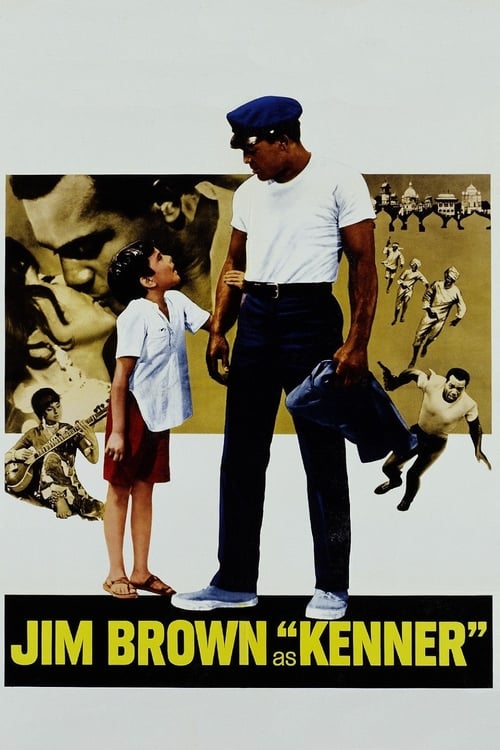
The film opens with the rhythmic chaos of Bombay’s streets, where a loud bird’s song signals a new day for a young boy named Saji. This domestic intimacy sets the stage for a 1969 drama that uses the city’s sensory overload to contrast with the cold precision of its American protagonist. Roy Kenner, played by Jim Brown, is a man driven by a singular, violent purpose: finding the killer of his partner. The film’s argument is that this American resolve, embodied by Brown’s physicality, is the only force capable of cutting through the labyrinthine danger of the East. The sold meaning is one of cross-cultural paternalism. Kenner does not just hunt a man; he absorbs a family. He becomes "Uncle" to Saji and a lover to Anasuya, suggesting that American masculinity is a stabilizing force in a world perceived as spiritually rich but physically chaotic. The camera lingers on the tenderness between Kenner and the child, framing the Black American hero as a benevolent guardian who brings order to the "exotic." However, the film’s internal logic pulls against this warmth. The local culture is often treated as a backdrop for Kenner’s internal struggle with "hate," a vice he is warned will "eat out his guts." The tragedy of Anasuya’s death serves as the film’s moral pivot. Her removal strips Kenner of his emotional anchor, forcing him to return to his original, colder mission. The final confrontation atop a building is a physical spectacle that resolves the plot, but the true ending is the quiet departure of Kenner and Saji toward the United States. The film suggests that while India offers spiritual depth, it is ultimately a place of loss. The last image is one of displacement: a Black man and an Indian boy, bonded by trauma, leaving the "beautiful memories" of the city for the safety of the West. It is a fable of protection that ultimately reinforces the idea that the American sphere is the only place where a family can truly survive.
Category Breakdown
No same-sex intimacy or non-binary characters appear. The narrative relies on a strictly heterosexual romance between the American lead and the Indian mother, leaving LGBTQ+ representation entirely absent from the on-screen inventory.
Anasuya serves as the emotional anchor raising Saji, but she is killed to deepen the male protagonist's isolation. Jim Brown retains final agency, rescuing the child and returning to the U.S., while the female lead’s narrative arc ends in death.
Jim Brown leads as a competent Black American protector, while South Asian characters like Saji and Anasuya are treated with genuine warmth. The film avoids caricature, presenting a cross-cultural dynamic where the local family is depicted with dignity rather than exoticism.
The film romanticizes Indian domesticity and spirituality as a moral counterweight to Western violence, yet ultimately validates the American journey as the final destination. India is framed as a place of spiritual depth but physical loss, reinforcing the West as the safe haven.
No characters display physical or mental impairments. The narrative focuses on physical fitness and emotional resilience rather than disability, leaving the category absent from the cast and plot developments throughout the film.
Present on Screen
Limited or Absent
Official Synopsis
Roy Kenner arrives in Bombay hot on the heels of dope smuggler Tom Jordan, the man who murdered his partner. Combing the city for clues to Jordan's whereabouts, Kenner crosses paths with 9-year-old Saji. Saji soon helps save Kenner from the lethal drug dealers, and takes Kenner to his home. Love soon blossoms between Kenner and Anasuya, Saji's mother, and Saji comes to see him as a father. But Kenner's obsession with vengeance threatens to engulf this accidental family in tragedy.
1969
1943
1957

1985
1989

1980
1990
1974
No reviews yet. Be the first to share your thoughts on this movie!
Use the rating form above to leave a star rating and optional review.