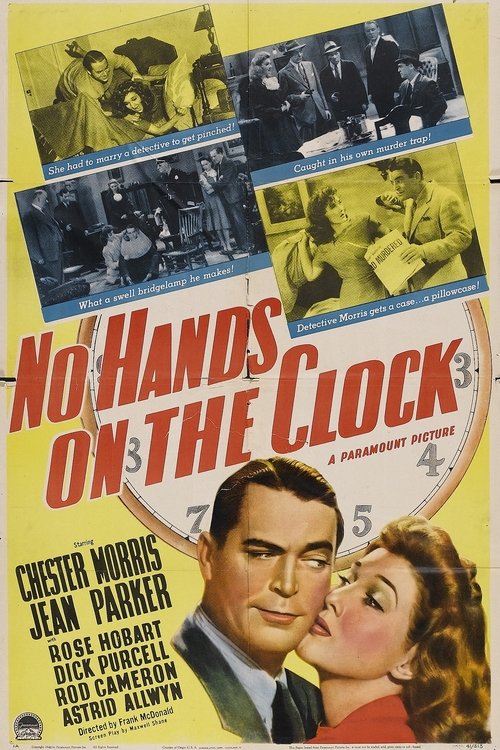
No Hands on the Clock
1941
No user ratings available yet
Diversity score: 1.7 out of 10

1944
NRDirector
Frank McDonald
Runtime
75 minutes
Average Rating
No ratings yetSynopsis
An insurance salesman, Albert Tuttle, is hired as a body guard for a millionaire.
Overall Score
Minimal
Category Breakdown
LGBTQ+ Representation
The film lacks any discernible presence of non-cisnormative identities. There is no evidence of same-sex intimacy or queer-coded character arcs.
Gender Representation
Character dynamics suggest a narrative focus on conventional masculine agency. The film maintains traditional gender hierarchies without subverting established roles.
Racial & Ethnic Diversity
Casting and setting reflect the homogeneous demographic norms of 1944. There is no evidence of characters of color with significant agency.
Religious & Cultural Diversity
The narrative aligns with traditional Western institutional values. It functions within the standard moral frameworks of its era without critiquing the social order.
Disability Representation
There is no documented evidence of characters with visible or invisible disabilities. The film does not engage with neurodivergence or physical disability.
Strengths
Areas for Improvement
AI Analysis
One Body Too Many is a standard genre piece that reinforces the social and cultural norms of the mid-1940s. The narrative prioritizes suspense and mystery tropes over the exploration of intersectional identities or the subversion of systemic power dynamics. As a product of the studio system, the film adheres to conventional narrative architectures. It functions as a functional mystery-thriller that maintains the status quo rather than challenging the era's established social hierarchies. Ultimately, the film lacks progressive narrative elements. It presents a homogeneous worldview that reflects the limited demographic representation typical of its historical production context.
No reviews yet. Be the first to share your thoughts on this movie!
Use the rating form above to leave a star rating and optional review.
