
London to Brighton
2006
No user ratings available yet
Representation score: 5.6 out of 10
Representation Score
Fair
2009
Not RatedDirector
Penny Woolcock
Runtime
102 minutes
Average Rating
No ratings yetNew Showbiz Analysis
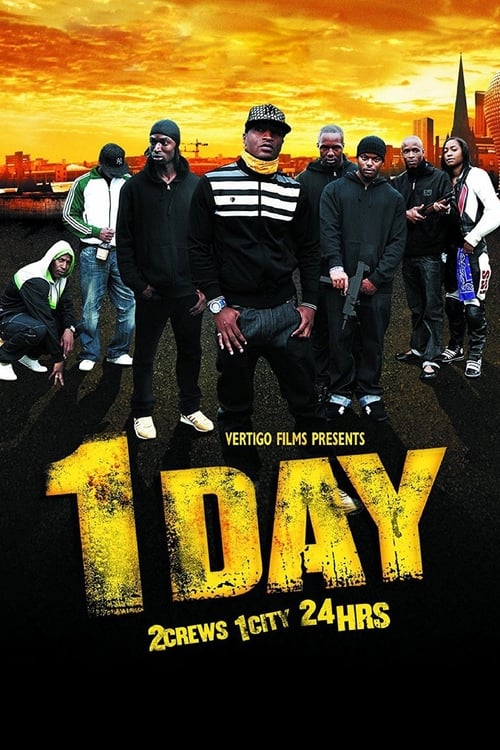
1 Day is a gritty work of cinematic realism that disrupts conventional Western-centric gazes. By centering an almost entirely Black cast in a post-colonial urban setting, the film achieves profound racial and cultural authenticity. It successfully reframes survivalist behaviors as necessary responses to systemic failures rather than inherent criminality. However, the film operates within a narrow social scope. The narrative is heavily male-dominated, leaving women and non-binary individuals on the periphery. There is also a complete absence of LGBTQ+ representation or non-assuming gender matches what was assigned at birth identities. Ultimately, the film's strength lies in its multi-layered exploration of poverty and identity. While it lacks diversity in gender and queer representation, its commitment to authentic racial storytelling provides a complex, non-traditional experience.
Category Breakdown
The film focuses entirely on the survivalist hierarchies of street children. It does not include any LGBTQ+ characters or non-assuming gender matches what was assigned at birth identities.
The narrative centers on a heavily male-dominated social structure. Women and non-binary individuals are largely absent from the central plot dynamics.
The production excels with an almost entirely Black cast. It prioritizes local vernacular and identities within a fictionalized African urban landscape.
The film provides a sophisticated critique of global capitalism and state failure. It portrays survival mechanisms as necessary responses to systemic poverty.
The story highlights physical vulnerabilities caused by extreme poverty. However, no characters with identified neurodivergence or physical disabilities are given significant roles.
Present on Screen
Limited or Absent
Official Synopsis
This searing British thriller follows Flash (Dylan Duffus), who's safeguarding his buddy Angel's (Yohance Watson) cash until his release from prison. Now Angel is out -- and Flash is 100 pounds short. He turns to a lowlife named Evil (Tobias Duncan) for help, the first in a series of mistakes. Now, Flash has more than just Angel hunting him down. Directed by Penny Woolcock (Mischief Night), the film co-stars Ohran Whyte and Chris Wilson
2006
2008
2009

2015

2009
2002
2022
2012
No reviews yet. Be the first to share your thoughts on this movie!
Use the rating form above to leave a star rating and optional review.