
Earworm
2024
No user ratings available yet
Representation score: 3.3 out of 10
Representation Score
Fair
2025
RDirector
Erik Bloomquist
Runtime
85 minutes
Average Rating
No ratings yetNew Showbiz Analysis
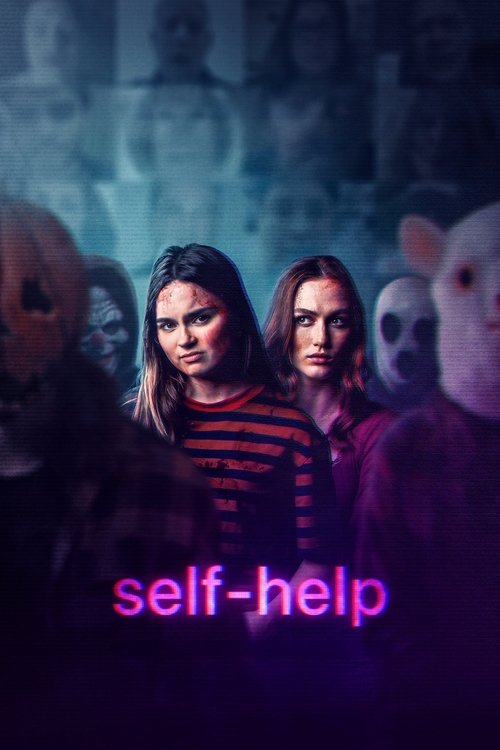
The film opens on the sterile manicure of a suburban street, a visual promise of safety that the narrative immediately breaches. Self-Help sells the anxiety of the modern self-improvement industrial complex, positioning the "guru" not as a savior but as a grotesque functionary of a hollow system. The camera loves the victims—Olivia and her peers—treating their anxiety as worthy of empathy, while the "Clown Man" remains a silhouette, a mask, a farce. The sold meaning is clear: the pursuit of external validation is a form of self-destruction. However, the film’s internal logic pulls against its progressive framing. While it critiques the cult’s emptiness, it relies on traditional gender hierarchies to structure the threat. The mother is a passive entangled object, and the male authority figures, even in their absurdity, hold the structural power. Olivia’s competence is real, but it is framed as a rescue mission for a dependent female relative, a dynamic that reinforces the very traditional family bonds the film’s cultural critique might suggest are fragile. The ending does not offer a neat moral victory; the survivors are left in the wreckage of their own suburban facades. The "help" was the violence, and the punishment is the loss of the illusion. The film is a sharp, if uneven, critique of the commodification of the self, where the last image is not a triumph, but the quiet, devastating realization that the system remains intact even as the individual is broken.
Category Breakdown
The cast and dialogue depict exclusively heterosexual pairings and family units. No on-screen queer characters or same-sex intimacy appear in the narrative.
Olivia functions as the competent protagonist who navigates the crisis. However, the mother remains a passive victim, and male authority figures hold the structural power.
The ensemble is overwhelmingly white, reflecting the suburban setting. Blaque Fowler appears as Andy, providing minor non-white presence, but the core community remains unmarked-majority.
The film critiques the commodification of mental health and the emptiness of suburban self-actualization. Traditional institutions are portrayed as fragile, while the cult is exposed as a hollow, exploitative system.
Mental health struggles are treated as plot devices for the cult’s recruitment. No characters are depicted with physical or cognitive impairments as a central identity.
Present on Screen
Limited or Absent
Official Synopsis
A young woman infiltrates a dangerous self-actualization community after her mother becomes entangled with its enigmatic leader.
2024
2024
2023
2014
2021

2021
2023
2021
No reviews yet. Be the first to share your thoughts on this movie!
Use the rating form above to leave a star rating and optional review.