Find another title
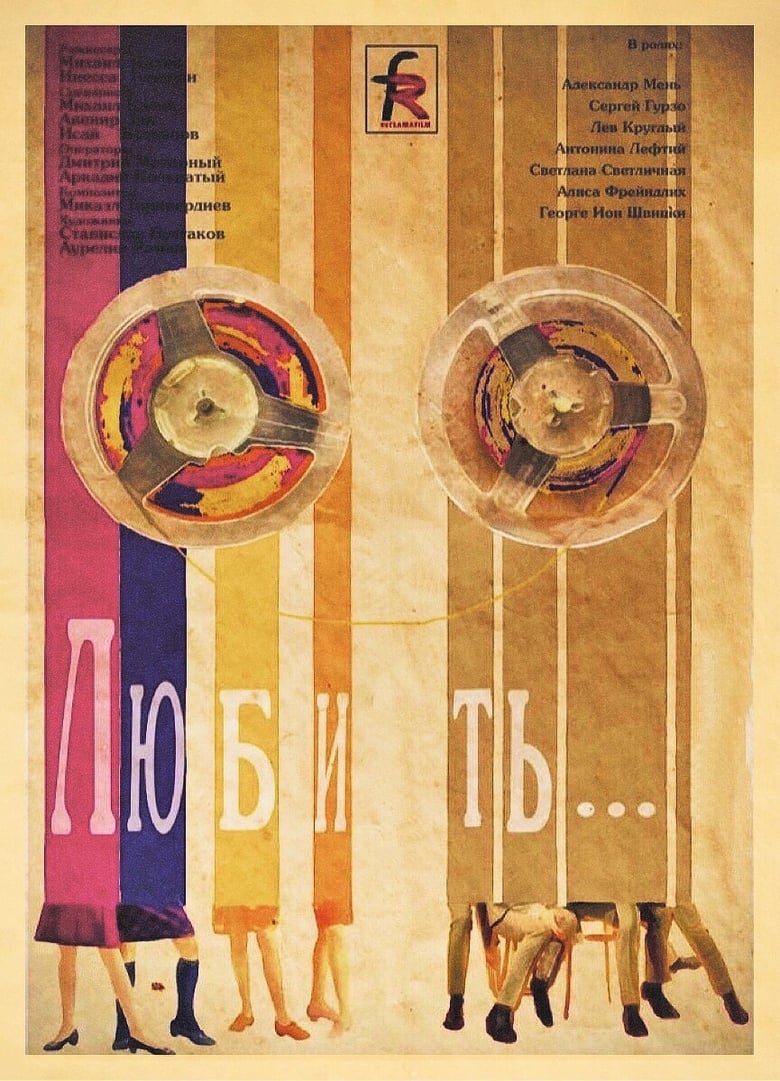
To Love
1968
Director
Mikhail Kalik, Inna Tumanyan
Runtime
73 minutes
Average Rating
No ratings yetSynopsis
Four love stories connected by newsreels of the late 60s. Each short story begins with an epigraph taken from the Song of Songs of the Old Testament. The stories are interconnected by documentary shots and numerous interviews taken on the streets from passers-by who are asked the same question: “what does it mean to love?”.
Where to Watch
Diversity & Representation
Overall Score
Fair
Category Breakdown
LGBTQ+ Representation
The film explores the universality of romantic longing through documentary interviews. While it lacks explicit queer identities, its structure deconstructs heteronormative definitions of romance.
Gender Representation
The narrative disrupts traditional hierarchies by centering female emotional agency. It avoids male-leader tropes, instead highlighting the vulnerability of men and the internal heartbreak of women.
Racial & Ethnic Diversity
The cast appears largely homogeneous, reflecting the urban Soviet experience of 1968 Leningrad. There is no explicit use of non-Western metaphors or diverse ethnic casting.
Religious & Cultural Diversity
The film prioritizes subjective human experience over religious dogma. It uses biblical epigraphs as thematic springboards rather than tools for institutional or spiritual authority.
Disability Representation
There is no significant evidence regarding the portrayal of physical or neurodivergent disabilities within the film's narrative.
Strengths
- Subverts traditional gender hierarchies by centering female emotional agency.
- Replaces monolithic cultural truths with a pluralistic, subjective view of morality.
- Uses documentary elements to deconstruct rigid romantic archetypes.
Areas for Improvement
- Lacks explicit representation of LGBTQ+ identities or non-cisnormative pairings.
- Reflects a homogeneous ethnic demographic typical of its 1968 Soviet setting.
- Provides no visible representation of physical or neurodivergent disabilities.
AI Analysis
To Love offers a lyrical, impressionistic departure from the rigid Socialist Realism typical of its era. By blending scripted romance with street-level interviews, the film replaces monolithic truths with a pluralistic view of human emotion. The work excels at subverting traditional romantic hierarchies and emphasizing emotional subjectivity. It moves away from didactic storytelling to focus on the transient, fragile nature of connection. However, the film remains limited by its historical and geographic context. It lacks overt intersectional representation regarding race and LGBTQ+ identities, maintaining a relatively singular demographic focus.
Rate this Movie
Reviews
No reviews yet. Be the first to share your thoughts on this movie!
Use the rating form above to leave a star rating and optional review.