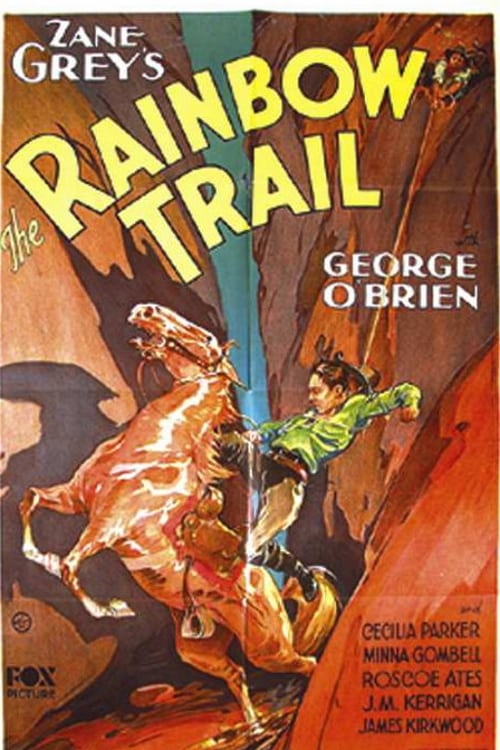
The Rainbow Trail
1932
No user ratings available yet
Diversity score: 3.1 out of 10
No Poster Available
1924
PassedDirector
Jacques Jaccard
Runtime
300 minutes
Average Rating
No ratings yetSynopsis
The 15-chapter plot follows, in a fanciful manner, the General Fremont expedition into Spanish California to acquire California for the United States, and the discovery of gold at Sutter's Mill. Chapter titles: 1. Soldiers of Fortune 2. Red Men and White 3. A Night of Terror 4. The Empire Builders 5. A Web of Lies 6. Demetroff's Vow 7. Facing Death 8. Under the Bear Flag 9. A Ride of Peril 10. Yellow Metal and Blue Blood 11. Gold Madness 12. Crimson Nights 13. Vigilante's Justice 14. For Life and Love 15. Trail's End
Overall Score
Limited
Category Breakdown
LGBTQ+ Representation
The film lacks any evidence of LGBTQ+ characters or narratives. It adheres to the heteronormative romantic structures typical of 1920s silent cinema.
Gender Representation
The narrative emphasizes masculine-coded themes of conquest and frontier survival. Female characters appear to function as traditional romantic archetypes rather than independent agents.
Racial & Ethnic Diversity
Indigenous populations are present, as indicated by the chapter 'Red Men and White.' However, they likely serve as obstacles within a colonialist framework.
Religious & Cultural Diversity
The story centers on American exceptionalism and manifest destiny. It reinforces the historical narrative of Westward expansion and capitalist growth.
Disability Representation
There is no mention of characters with physical or neurodivergent disabilities. The available information provides no basis for an assessment of disability representation.
Strengths
Areas for Improvement
AI Analysis
Days of '49 is a traditional silent-era Western that mirrors the socio-political hierarchies of the 1920s. The film focuses on the General Fremont expedition and the gold rush, framing these events through the lens of empire-building and American expansion. The narrative structure prioritizes masculine themes of adventure and conquest. While different ethnic groups are included in the historical setting, they are presented within a framework of colonial progress rather than with nuanced agency. Ultimately, the film functions as a celebratory portrayal of Westward expansion. It lacks intersectional depth or any critique of the prevailing power dynamics of the era.
No reviews yet. Be the first to share your thoughts on this movie!
Use the rating form above to leave a star rating and optional review.