Wendy's Palace
1971
No user ratings available yet
Representation score: 5.4 out of 10
Representation Score
Good
1991
RDirector
Zalman King
Runtime
111 minutes
Average Rating
No ratings yetNew Showbiz Analysis
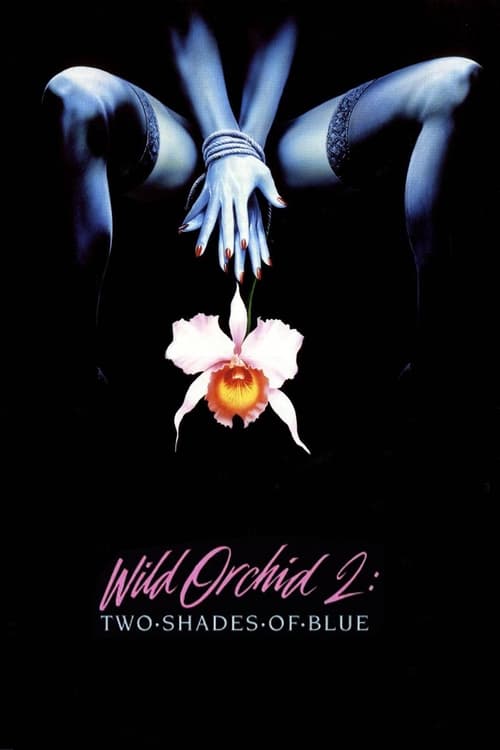
Wild Orchid II: Two Shades of Blue successfully challenges traditional gender power dynamics by placing the female protagonist at the center of her own emotional and sensory journey. This approach avoids common clichés of female passivity. However, the film is constrained by the homogenous casting practices of its time, which limits its ability to explore multi-layered themes. While it offers a critique of social structures, it does so primarily through an individual lens rather than a diverse social perspective. Overall, while the film questions traditional societal norms, it falls short in providing a broad and inclusive representation of different identities and backgrounds.
Category Breakdown
The story focuses on heterosexual relationships and lacks explicit LGBTQ+ characters or non-binary gender identities, sticking to traditional assumptions about relationships.
The film emphasizes female empowerment and autonomy. It portrays Blue's exploration of her sexuality as an active and self-directed journey.
The casting is predominantly white and follows a uniform approach typical of early 90s erotic dramas. There is little diversity among the characters, especially those with significant roles.
The story critiques rigid social institutions by focusing on the sex industry as a means of survival and personal discovery. However, it centers on individual experiences rather than broader political contexts.
The film does not feature characters with visible or invisible disabilities. The narrative focuses solely on the sensory experiences of an able-bodied cast.
Present on Screen
Limited or Absent
Official Synopsis
Blue is a teenage girl who lives with her Jazz playing father Ham. Ham gets very sick and dies, and now Blue must support herself somehow. Elle, the headmistress at a brothel, talks her into living and working at her establishment. She decides to leave the business and lead a normal life. Elle is hellbent to see that she never has one.
1971

1978
1997
1962
1999
1989
2002
2001
No reviews yet. Be the first to share your thoughts on this movie!
Use the rating form above to leave a star rating and optional review.