Find another title
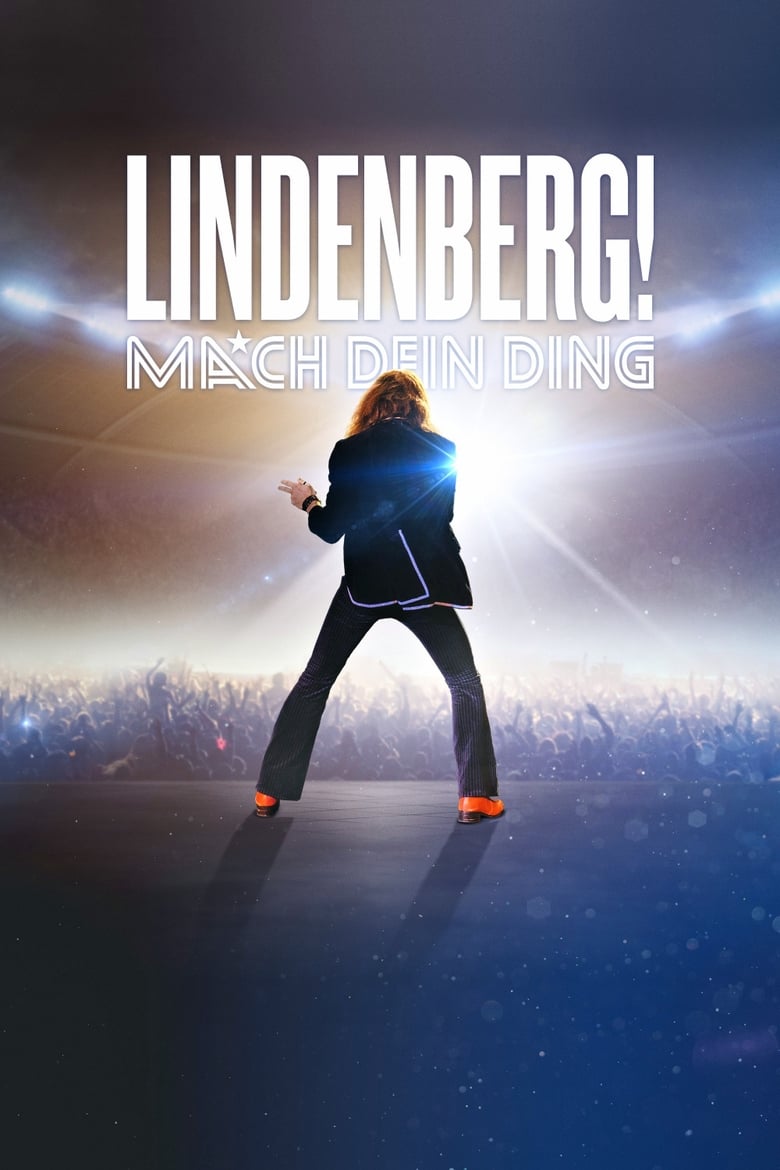
Lindenberg! Mach dein Ding
2020
Director
Hermine Huntgeburth
Runtime
139 minutes
Average Rating
No ratings yetSynopsis
Long before his big stage breakthrough in 1973 in Hamburg, and 4.4 million records sold, the rock musician Udo Lindenberg from the Westphalian province, the man with the long hair and the hat, had many adventures. Before it all started, he moved from the remoteness of Gronau to Hamburg, where he met Paula, who was not his great love, but was quite a hottie. When the team of three was complete with Steffi Stephan, the idea of founding a band developed. But the road to get there was a long one: he drummed as a jazz drummer in bands, had a highly dangerous performance in a US military base in the middle of the Libyan desert and always believed in making it to the very top.
Where to Watch
Diversity & Representation
Overall Score
Fair
Category Breakdown
LGBTQ+ Representation
The film centers on a heteronormative romantic trajectory, specifically the protagonist's relationship with Paula. While it captures the 1970s counterculture, it does not prioritize queer narratives or non-cisnormative identities.
Gender Representation
The narrative follows a traditional 'great man' biopic structure. While female collaborators like Steffi Stephan show professional agency, women often serve roles that support the male protagonist's development.
Racial & Ethnic Diversity
The film reflects the demographic realities of 1970s West Germany and the Libyan desert. It functions as a period-accurate depiction of a largely homogeneous social environment without subverting racial hierarchies.
Religious & Cultural Diversity
The film excels at depicting countercultural rebellion against rigid, conservative structures. It frames Lindenberg’s rise as a struggle for artistic integrity against the conformity of the German music industry.
Disability Representation
There are no prominent depictions of visible or invisible disabilities that drive the narrative or serve as central character arcs.
Strengths
- Effective depiction of countercultural rebellion against conservative industry structures.
- Strong exploration of the tension between artistic integrity and corporate conformity.
- Meaningful portrayal of individualistic expression against restrictive professional hierarchies.
Areas for Improvement
- The 'great man' biopic structure tends to relegate female characters to supporting roles.
- Lack of explicit focus on queer narratives despite the 1970s setting.
- Minimal representation of racial or ethnic diversity beyond period-accurate homogeneity.
AI Analysis
Lindenberg! Mach dein Ding is a biographical study that prioritizes individual identity over systemic intersectional representation. It focuses on the friction between personal expression and the restrictive social hierarchies of the 1970s. The film's strength lies in its portrayal of defiance against institutional authority. By framing the protagonist's journey as a rebellion against the music establishment, it explores themes of personal liberation. However, the work remains grounded in period-specific realism. It does not actively use diverse casting to subvert historical norms, resulting in a narrative that reflects the era's demographic homogeneity.
Rate this Movie
Reviews
No reviews yet. Be the first to share your thoughts on this movie!
Use the rating form above to leave a star rating and optional review.