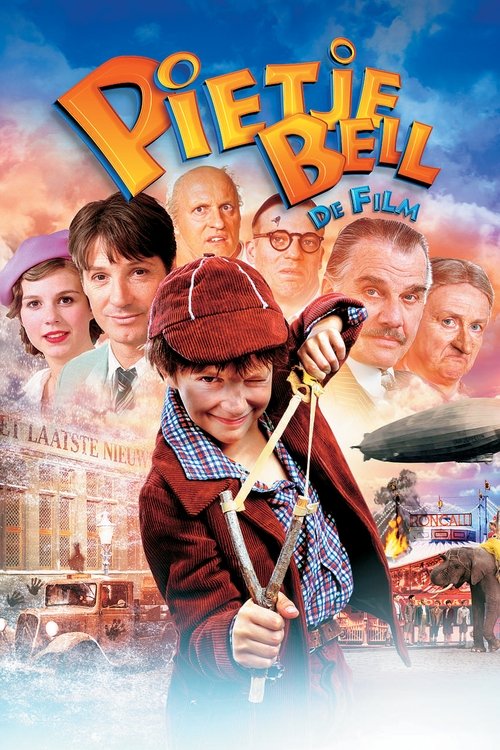
Peter Bell
2002
No user ratings available yet
Diversity score: 3.2 out of 10

2003
Director
Steven de Jong, Marc Willard
Runtime
100 minutes
Average Rating
No ratings yetSynopsis
Two young boy twins receive a boat of their own by a stroke of luck. It turns out to be very fast and they use their boat to help out their friends.
Overall Score
Limited
Category Breakdown
LGBTQ+ Representation
The film focuses on childhood adventure and fraternal bonding. It operates within a conventional social framework typical of early-2000s family media, lacking LGBTQ+ characters or non-cisnormative identities.
Gender Representation
The narrative centers on the agency of young male protagonists. While the twins demonstrate mastery over their boat, the film follows a traditional gendered approach to heroic childhood roles.
Racial & Ethnic Diversity
As a localized Dutch production, the film reflects a relatively homogeneous social environment. It lacks a multi-ethnic cast or intentional intersectional breadth.
Religious & Cultural Diversity
The story emphasizes friendship, technical boating skills, and local community. It avoids religious critique or the deconstruction of Western institutions, focusing instead on traditional childhood virtues.
Disability Representation
There are no prominent characters identified as having visible or invisible disabilities. The narrative does not utilize disability as a plot device.
Strengths
Areas for Improvement
AI Analysis
The film is a traditional, localized family adventure that prioritizes conventional storytelling tropes. Its narrative architecture is built around the adventures of identical twins, which anchors the story in a very specific, homogeneous demographic. Because the work is based on domestic literature and focuses on regional childhood experiences, it lacks engagement with intersectional identities. The social framework remains largely conventional, adhering to the demographic norms of its era and regional context. Ultimately, the film offers limited disruption of established social hierarchies, functioning instead as a straightforward coming-of-age tale centered on fraternal bonds and technical skill.
2002
2010
2018

2017

2024

2012
2004
2016
2013
2017
2011
1998
No reviews yet. Be the first to share your thoughts on this movie!
Use the rating form above to leave a star rating and optional review.