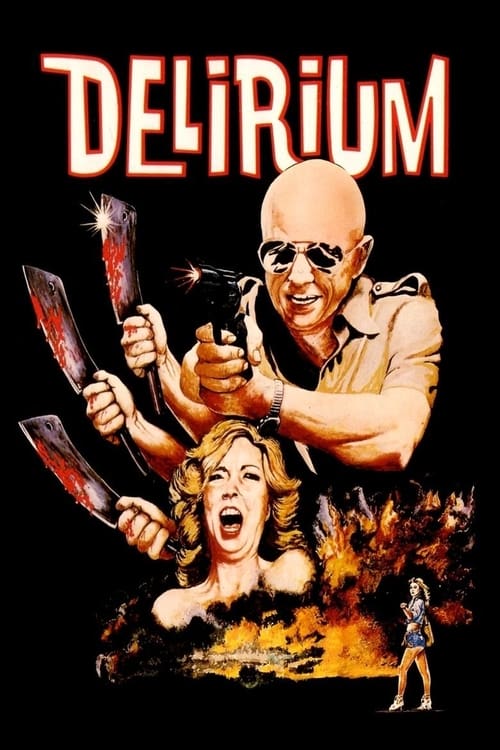
Delirium
1979
No user ratings available yet
Diversity score: 2.0 out of 10

1973
RDirector
Arne Mattsson
Runtime
102 minutes
Average Rating
No ratings yetSynopsis
A young woman dies from a drug overdose, and her brother and his friend try to find out who supplied her with the narcotics. Soon, they're chased all over Stockholm by the cruel but suave ring leader Harry and his thugs. Among the wildness is a fight in a brothel filled with naked girls, and when Servus, one of the thugs, fails to kill our heroes, Harry has his men kill Servus with a razor blade equipped glove. Oh, and the heroine is raped by a guy sucking on a comforter
Overall Score
Limited
Category Breakdown
LGBTQ+ Representation
The film lacks explicit LGBTQ+ characters or narratives addressing non-cisnormative identities. It operates within a traditional crime framework focused on heteronormative pursuit and drug-related conflict.
Gender Representation
The story centers on a male-driven quest for justice within a male-dominated criminal underworld. Female characters are largely relegated to roles of victimization, appearing as victims of overdose or sexual violence.
Racial & Ethnic Diversity
Set in Stockholm, the film reflects the demographic homogeneity typical of 1970s Swedish cinema. There is no evidence of non-white casting or intentional racial blending in the narrative.
Religious & Cultural Diversity
The film explores urban corruption and social dysfunction through standard crime genre conventions. It focuses on individual criminality rather than offering a systemic critique of Western institutions or power dynamics.
Disability Representation
There is no mention of characters with visible or invisible disabilities. The narrative does not include depictions of neurodivergence or chronic illness.
Strengths
Areas for Improvement
AI Analysis
Dirty Fingers is a genre-driven thriller that prioritizes dark, transgressive themes over social critique. The narrative structure relies heavily on traditional tropes of male-centric pursuit and female victimization. While the film explores the dark underbelly of Stockholm, it does so through the lens of individual criminality. It lacks the intentionality needed to disrupt social hierarchies or provide meaningful intersectional representation. Ultimately, the film functions as a standard crime piece of its era, mirroring the demographic and narrative conventions of 1970s Swedish cinema.
No reviews yet. Be the first to share your thoughts on this movie!
Use the rating form above to leave a star rating and optional review.