A Distant Neighborhood
2010
No user ratings available yet
Representation score: 5.3 out of 10
Representation Score
Good
2024
Director
Shin Seung-hoon
Runtime
104 minutes
Average Rating
No ratings yetNew Showbiz Analysis
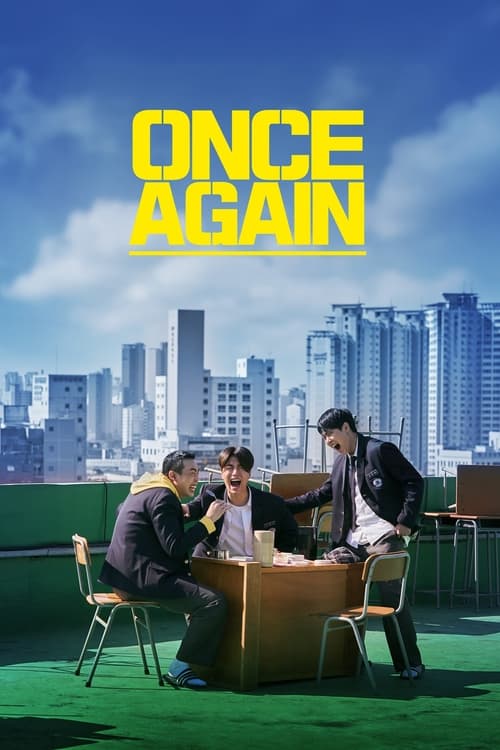
Once Again (2024) is a character-driven film that uses fantasy to critique traditional social hierarchies. By placing a middle-aged man in a youthful body, the film explores his failures as a father, son, and husband. The film stands out for its willingness to challenge the stability of the family unit. It shifts focus from reinforcing traditional duties to promoting personal reclamation. However, the narrative remains limited by its narrow demographic focus. The lack of diverse representation and the reliance on a homogeneous cultural setting restrict a broader exploration of the human experience.
Category Breakdown
The film does not include explicit LGBTQ+ characters or explore non-straight relationships. The story centers on the protagonist's efforts to fit into a traditional family structure.
The narrative moderately challenges traditional masculine roles by depicting the protagonist's struggle to change his life. His previous adherence to patriarchal norms led to social instability.
Set in 1997 South Korea, the film reflects a relatively homogeneous society. It does not feature multi-ethnic casting or challenge racial norms.
The film questions traditional family structures by emphasizing individual self-improvement over societal obligations. Spiritual objects like talismans support personal growth rather than strict religious rules.
A facial scar serves as a key plot device representing physical impairment. The story focuses on the professional impact of disfigurement rather than the lived experience of disability.
Present on Screen
Limited or Absent
Official Synopsis
In his 40s, the stuntman Woo-seok wishes to go back to the prime of his life in 1997, before a facial scar ended his acting dreams. One day, he purchases five talismans from an unknown monk, hoping to change his life. However, during a film shoot, a car accident transports him back to his high school days in 1997. Now living as the high school student, he embarks on a project to revamp his past life, which was filled with a troublesome father, son, and husband.
2010

2015
2007
2014
2016
1986

2015
2000
No reviews yet. Be the first to share your thoughts on this movie!
Use the rating form above to leave a star rating and optional review.