124 Atwood
2026
No user ratings available yet
Representation score: 0.0 out of 10
Representation Score
Minimal
2026
Director
Loris Di Pasquale
Runtime
73 minutes
Average Rating
No ratings yetNew Showbiz Analysis
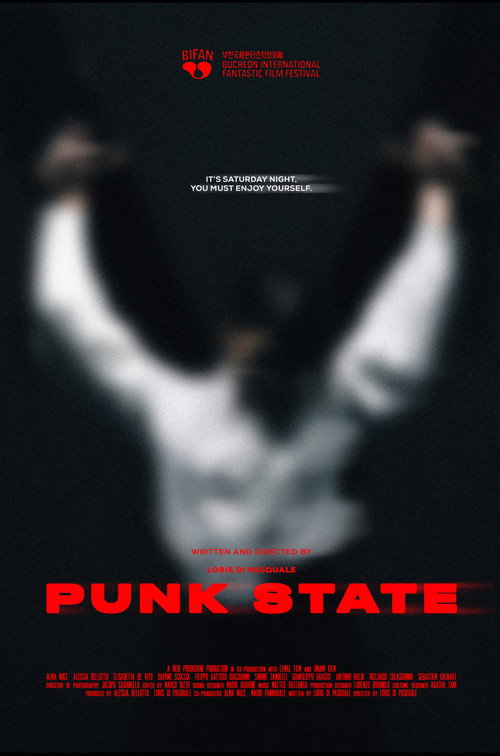
Punk State opens with the claustrophobic promise of an exclusive performance, seven guests arriving at a remote theatre only to discover they are the show. The film’s argument rests on the inversion of audience and performer, selling a vision where cultural consumption becomes a trap. The cast is heavily female, with four women against three men, but the synopsis offers no insight into who holds power or who is the joke within this dynamic. The presence of Don Pietro, a priest, introduces a traditional authority figure into the ensemble, yet it is unclear whether he is the obstacle, the punchline, or a neutral participant. The film’s cultural framing treats the theatre as a closed system, where the guests’ identities are stripped to their roles. Without dialogue or scene details, the sold meaning remains opaque: is the performance a critique of cultural elitism, a thriller about captivity, or a drama about identity? The last image, unknown here, would determine whether the film affirms the trap or breaks it. As it stands, the pictures show a homogeneous, insular group with no visible challenges to traditional hierarchies, but also no clear subversion. The film’s argument is thin, relying on the premise of the trap without revealing the mechanics of the performance.
Category Breakdown
No queer characters or same-sex intimacy appear in the cast or synopsis. The seven guests are defined solely by their roles in the performance trap, leaving identity themes entirely absent from the narrative.
Four women (Nina, Emilia, Cordelia, Anna) face three men (Claudio, Franco, Don Pietro). The synopsis offers no detail on power dynamics or competence, leaving gender hierarchies unassessed beyond mere presence in the ensemble.
All listed cast members are Italian, with no non-white characters indicated in credits or plot. The remote theatre setting reinforces a homogeneous, insular group devoid of ethnic diversity.
The film frames culture as a trap where guests become the show. Don Pietro, a priest, introduces traditional authority, but the synopsis does not clarify if this institution is mocked, upheld, or the obstacle.
No disabled characters, impairments, or neurodivergent traits are mentioned in the cast list or synopsis. The available evidence contains no representation of disability or physical limitation.
Present on Screen
Limited or Absent
Official Synopsis
Seven guests arrive for an exclusive performance inside a remote theatre, unaware that they are the show.
2026
2013
2024
2026

2017
2016

2021

2022
No reviews yet. Be the first to share your thoughts on this movie!
Use the rating form above to leave a star rating and optional review.