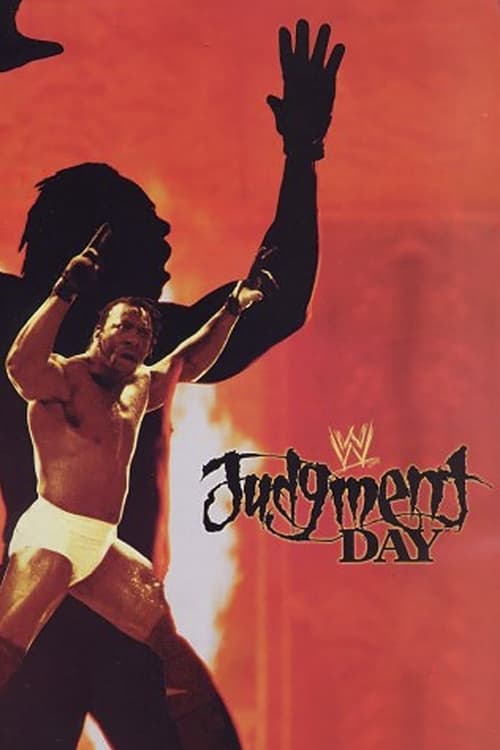
WWE Judgment Day 2003
2003
No user ratings available yet
Diversity score: 2.3 out of 10
2002
PG-13Director
Kevin Dunn
Runtime
180 minutes
Average Rating
No ratings yetSynopsis
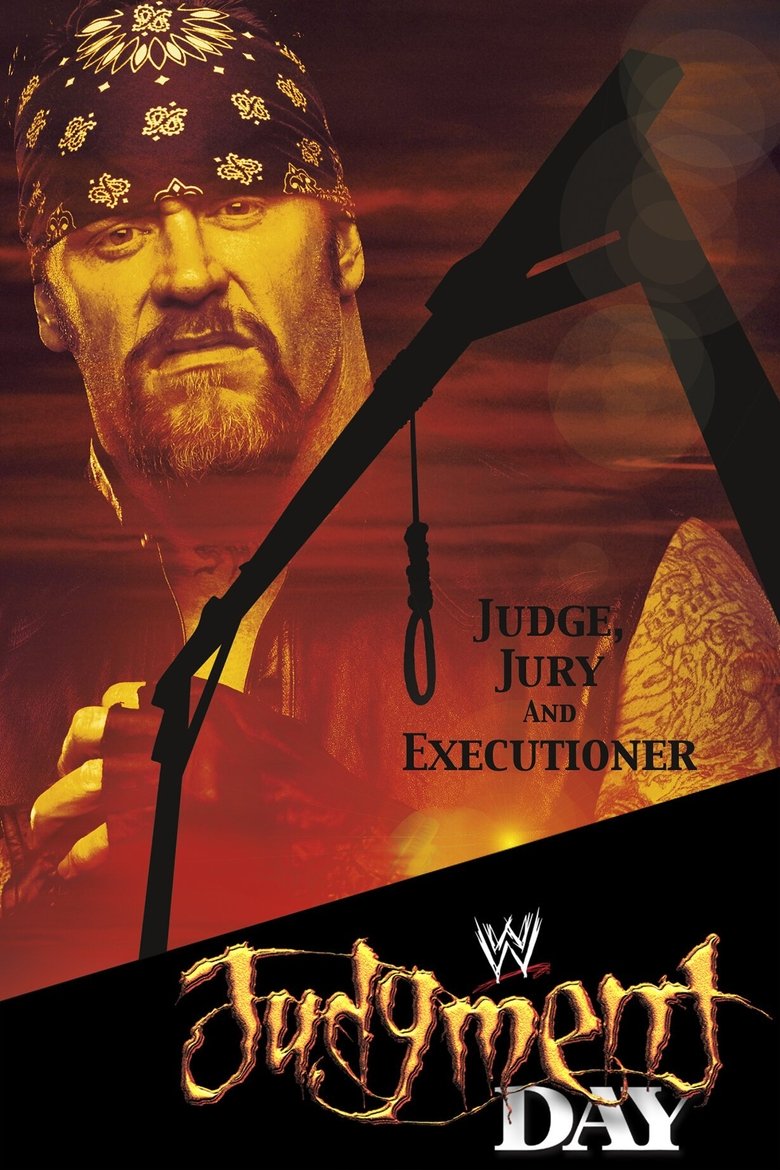
Judgment Day (2002) was the fourth annual Judgment Day PPV. It was presented by 1-800-CALL-ATT, and took place on May 19, 2002, at the Bridgestone Arena in Nashville, Tennessee. It featured talent from the Raw and SmackDown! brands. The main match from SmackDown was a Singles match for the WWE Undisputed Championship featuring The Undertaker challenging Hollywood Hulk Hogan. The main match from Raw was a Handicap match featuring Steve Austin versus Ric Flair and The Big Show. The predominant match from SmackDown on the undercard was a Hell in a Cell match between Triple H and Chris Jericho. The other predominant from Raw was a Singles match for the WWE Intercontinental Championship featuring Eddie Guerrero defending the belt against Rob Van Dam. The other primary match on the undercard was a Hair vs. Hair match featuring Edge against Kurt Angle.
Overall Score
Limited
Category Breakdown
LGBTQ+ Representation
The broadcast lacks any discernible presence of LGBTQ+ characters or non-cisnormative identities. It adheres to a traditional heteronormative framework without attempting to expand upon standard gender roles.
Gender Representation
The narrative relies heavily on masculine archetypes of physical dominance. While the Women's Championship match provides visibility for female performers, the structure remains within conventional gender hierarchies.
Racial & Ethnic Diversity
The roster displays moderate diversity through high-agency performers like Eddie Guerrero. However, the demographic composition leans toward a predominantly white, Anglo-Saxon cast reflecting traditionalist casting approaches.
Religious & Cultural Diversity
The event functions as a celebration of commercialized spectacle and traditional hierarchies. It reinforces conventional morality through a hero-versus-villain structure rather than exploring moral relativism.
Disability Representation
There is no visible or invisible disability representation within the match card. Characters are presented solely through the lens of peak physical athleticism.
Strengths
Areas for Improvement
AI Analysis
WWE Judgment Day 2002 operates within a traditionalist media architecture that prioritizes established athletic hierarchies over intersectional representation. The event relies on binary moralities and Western entertainment tropes, emphasizing physical dominance and brand loyalty. While the roster includes pockets of ethnic diversity through specific performers, the overarching demographic remains largely homogeneous. The presentation reinforces conventional social structures rather than challenging systemic norms or exploring nuanced identity politics.
2003
2007
2009

2005
2006
2008
2000
2004
2001
2012
2001

2004
No reviews yet. Be the first to share your thoughts on this movie!
Use the rating form above to leave a star rating and optional review.