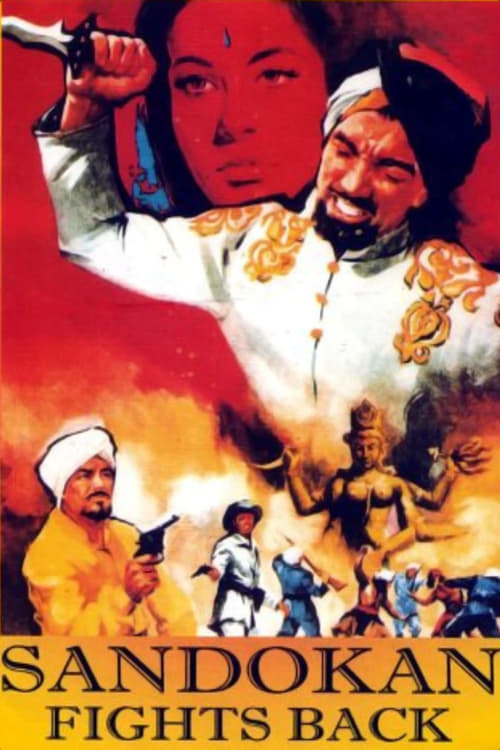
Sandokan Fights Back
1964
No user ratings available yet
Diversity score: 4.3 out of 10

1963
Director
Luigi Capuano
Runtime
89 minutes
Average Rating
No ratings yetSynopsis
Set in medieval Venice, this swashbuckler chronicles the courage of an executioner and his godson as they attempt to show that the Grand Inquisitor is in league with murderous pirates.
Overall Score
Limited
Category Breakdown
LGBTQ+ Representation
The film offers no evidence of non-cisnormative identities or same-sex intimacy. The story focuses on traditional masculine bonds between an executioner and his godson.
Gender Representation
Narrative agency is centered on male characters and traditional masculine roles. There is no indication of female characters driving the plot or subverting gender hierarchies.
Racial & Ethnic Diversity
The production follows standard 1960s European casting practices. It reflects the historical Mediterranean setting without evidence of race-bent casting or diverse identity metaphors.
Religious & Cultural Diversity
The film critiques institutional corruption by framing the Grand Inquisitor as a villain. However, it remains a traditional hero versus villain tale rather than a broader social critique.
Disability Representation
There is no evidence of characters with disabilities being portrayed with agency. Physical impairments are not addressed within this swashbuckler framework.
Strengths
Areas for Improvement
AI Analysis
Blood of the Executioner is a conventional 1960s swashbuckler that prioritizes genre tropes over social complexity. The narrative follows a standard hero's journey centered on male-dominated action and the exposure of corruption. While the film introduces moral complexity by depicting a religious authority as corrupt, it does not use this to challenge systemic hierarchies or promote progressive social values. The focus remains on a traditional adventure structure. Ultimately, the film lacks intersectional depth, diverse casting, or any intentional subversion of the social norms typical of its era.
No reviews yet. Be the first to share your thoughts on this movie!
Use the rating form above to leave a star rating and optional review.