
Paris Blues
1961
No user ratings available yet
Representation score: 3.8 out of 10
Representation Score
Fair
1988
PG-13Director
Ricardo Franco
Runtime
104 minutes
Average Rating
No ratings yetNew Showbiz Analysis
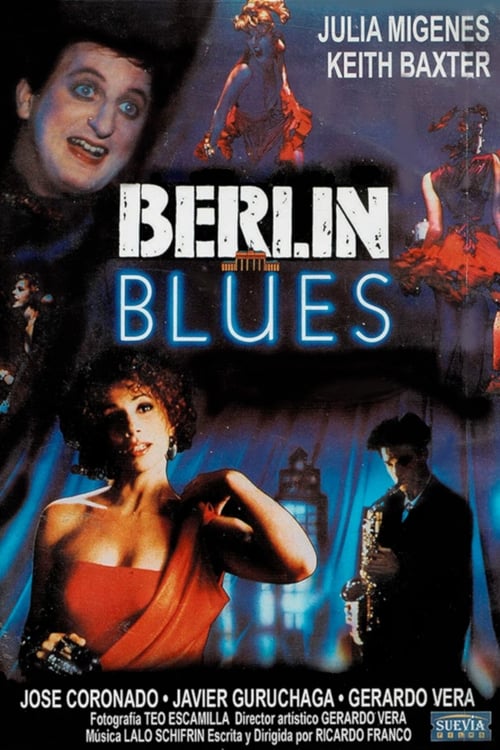
Berlin Blues is a character-focused historical drama that explores personal ability to act through its setting. It avoids limiting clichés by emphasizing a woman's emotional autonomy and incorporating a cross-cultural musical style. Though the film lacks significant LGBTQ+ or disability representation, it successfully uses the blues genre to bridge cultural divides. The narrative emphasizes the personal struggles within a divided geopolitical landscape rather than a wide range of racial diversity. Overall, the film offers an intimate look at human connections within a fragmented world, prioritizing emotional authenticity over broader systemic issues.
Category Breakdown
The film focuses on a heterosexual love triangle involving Lola, David, and Huessler. There is no indication of queer subtext or non-cisgender identities in the narrative.
Lola is a central protagonist who demonstrates strong emotional control and ability to act. Her role as a professional musician and her handling of complex betrayals move her beyond typical feminine stereotypes.
The casting of Julia Migenes-Johnson adds layers of diversity to the predominantly European cast. The blues genre brings African American cultural elements into the Cold War backdrop.
The film sets its action in West Berlin, highlighting the tension of the Iron Curtain and geopolitical divisions. Music serves as a means to express personal truths against rigid institutions.
The story does not include characters dealing with physical or cognitive disabilities.
Present on Screen
Limited or Absent
Official Synopsis
In Cold War-era West Berlin, Lola (Julia Migenes-Johnson), an American blues singer with a nightclub band, falls for the piano player, David (Jose Coronado). Their romance is cut short when David must return to his native East, and Lola soon begins an affair with Huessler (Keith Baxter), the bandleader. But any guilt Lola may feel for betraying David is assuaged when Huessler saves her from unexpected misfortune.
1961
2003

2008
1986
1998
1986
1980

1977
No reviews yet. Be the first to share your thoughts on this movie!
Use the rating form above to leave a star rating and optional review.