Small Ball: A Little League Story
2004
No user ratings available yet
Representation score: 2.8 out of 10
Representation Score
Limited
2010
TV-GDirector
Al Szymanski
Runtime
53 minutes
Average Rating
No ratings yetNew Showbiz Analysis
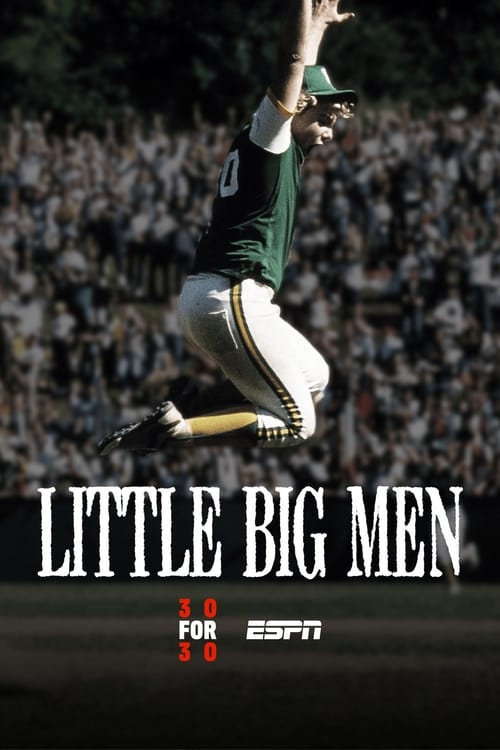
Little Big Men serves as a historical retrospective connecting a local sporting achievement to global geopolitical tensions. The film operates within the traditional framework of American sports history, emphasizing the socio-political realities of 1982. By staying within the conventional cultural norms of its subject matter, the film does not actively engage in deconstructing social hierarchies. Instead, it prioritizes preserving historical context and providing a backdrop for understanding the era. Ultimately, the film functions as a microcosm of the American experience during a specific time, focusing on community institutions rather than diverse social representation.
Category Breakdown
The film lacks LGBTQ+ characters or narratives. It focuses strictly on a 1982 Little League baseball team and the era's geopolitical climate.
The film focuses on a male-dominated youth baseball environment without highlighting female leadership or challenging traditional gender roles.
The film centers on a specific team from Washington during a time when the population was relatively homogeneous, with no emphasis on racial diversity.
The documentary emphasizes traditional Western narratives and American exceptionalism, framing the 1982 era through national struggles such as the Cold War.
The film does not address any characters dealing with visible or invisible disabilities.
Present on Screen
Limited or Absent
Official Synopsis
In 1982, Cody Webster and a small group of friends from Kirkland, Washington, sat anxiously in a dugout waiting to take the field for the championship game of the Little League World Series. Their focus was just about what you’d expect from any 12-year-old: hit the ball, throw strikes, cross your fingers and then maybe – maybe – you’ll win. Adults in the stands and watching from home saw a much broader field of play. The memories of American hostages and a crippling oil crisis were still fresh; the economic malaise of the late 1970s still lingered; and the new President was recovering from an assassination attempt even while confronting new threats from the Soviet Union. Meanwhile, back on that tiny baseball field in Williamsport, Pennsylvania, no American team had won a true international Little League World Series Championship in more than a decade. When the Kirkland players rushed from their dugout that day, they stepped onto a much bigger field than the one they saw.
2004
2009

2014
2013
2020
2004
2010
2014
No reviews yet. Be the first to share your thoughts on this movie!
Use the rating form above to leave a star rating and optional review.