Find another title
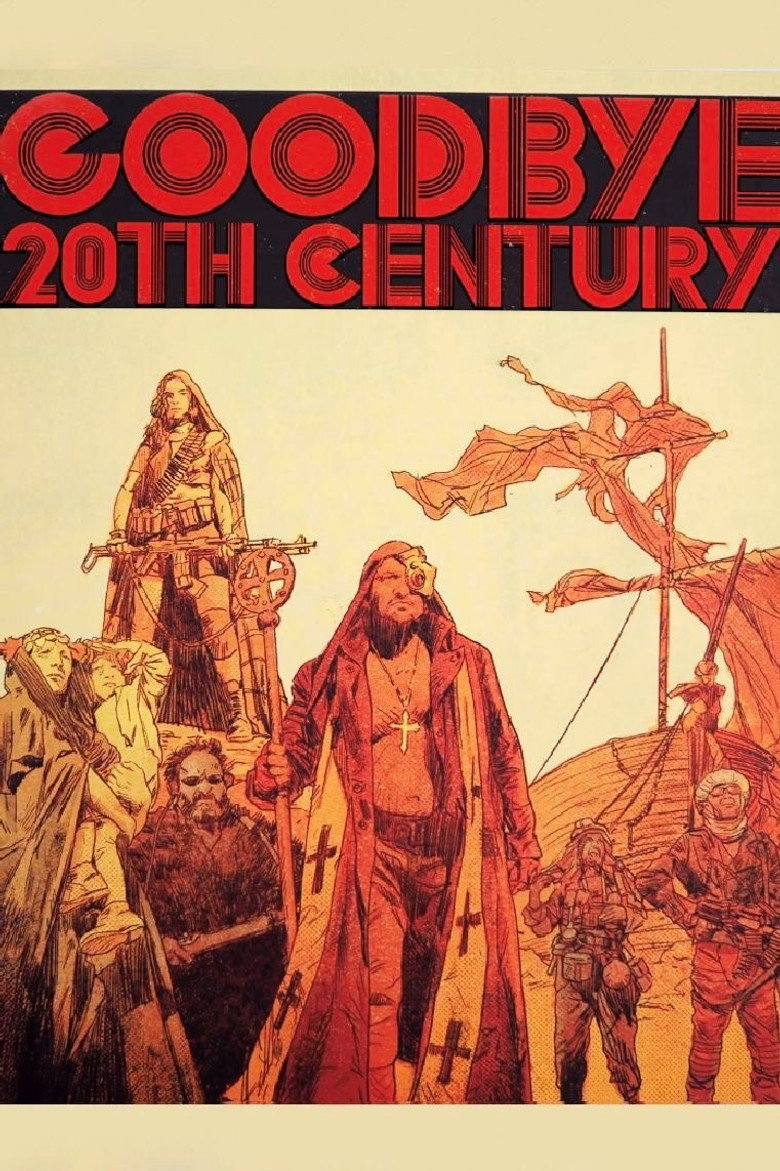
Goodbye, 20th Century
1998
Director
Darko Mitrevski, Aleksandar Popovski
Runtime
85 minutes
Average Rating
No ratings yetSynopsis
In the year 2019, after global destruction and descent into savagery, the immortal Kuzman tried to discover his destiny in order to learn how to die. As he enters the whirling circles of time, we discover the blasphemy of our century, and how it is to close its circle.
Where to Watch
Diversity & Representation
Overall Score
Fair
Category Breakdown
LGBTQ+ Representation
The film lacks explicit evidence of queer identities or non-heteronormative narratives. The focus remains on the existential journey of a single protagonist.
Gender Representation
The story centers on Kuzman, a male immortal, creating a traditional narrative focus. There is no clear evidence of female agency or gender-role subversion.
Racial & Ethnic Diversity
As a Balkan production, the film offers regional representation. However, it lacks specific details regarding intersectional depth or a diverse, non-white cast.
Religious & Cultural Diversity
The narrative critiques modern civilization and traditional structures through a postmodernist lens. It prioritizes subjective existential truths over established religious or social dogmas.
Disability Representation
There is no verifiable information regarding the portrayal of physical or neurodivergent disabilities in this work.
Strengths
- Strong thematic critique of modern civilization and traditional social structures.
- Engages with postmodernist skepticism toward progress and Western stability.
- Offers a unique Balkan cinematic perspective on science fiction and fantasy.
Areas for Improvement
- The narrative centers heavily on a male protagonist, limiting gender diversity.
- Lacks verifiable representation of LGBTQ+ identities or queer narratives.
- Provides no clear evidence of disability representation or neurodivergent perspectives.
AI Analysis
The film functions primarily as a philosophical and postmodernist inquiry into the collapse of historical certainties. Its strength lies in its thematic deconstruction of the 20th century and its critique of Western institutional stability. By exploring the 'blasphemy' of the era, the story moves beyond simple heroism to examine societal decay. However, the film's representation is limited by a heavy focus on a singular male protagonist. This centering of a male existential quest leaves little room for visible gender diversity or queer narratives. The lack of specific data regarding racial or disability representation further keeps the diversity profile modest. Ultimately, while the film excels at challenging cultural and historical frameworks, it lacks the intersectional breadth found in more contemporary, identity-focused cinema.
Rate this Movie
Reviews
No reviews yet. Be the first to share your thoughts on this movie!
Use the rating form above to leave a star rating and optional review.