
Undateable John
2019
No user ratings available yet
Representation score: 3.6 out of 10
Representation Score
Good
2017
Director
Peter Vack
Runtime
74 minutes
Average Rating
No ratings yetNew Showbiz Analysis
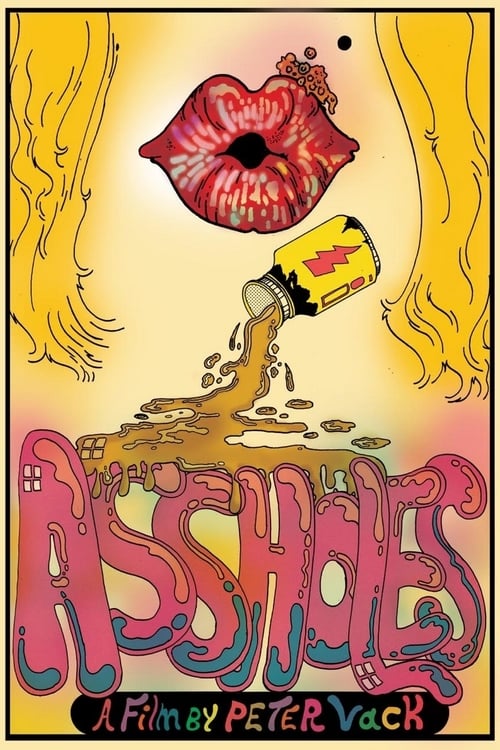
Assholes provides a gritty, character-driven exploration of addiction and unconventional romance. It deconstructs traditional relationship models, opting for moral complexity over sanitized, idealized depictions of love and stability. While the film touches on queer-coded social markers and mental health themes, it lacks explicit, high-visibility representation in terms of racial diversity and clear identity politics. The focus remains on the protagonists' internal struggles and social friction. Ultimately, the film serves as a progressive examination of human dysfunction. It challenges social norms by framing anti-social behavior as a form of raw expression, even if it relies on certain clichés to drive its dramatic tension.
Category Breakdown
The film highlights non-straight-centered social spaces through the use of substances like poppers. These details suggest an awareness of queer-coded environments, even though the central romance is the main focus.
The narrative challenges traditional romantic roles by focusing on flawed, recovering individuals. It avoids idealized archetypes, presenting a chaotic yet equal depiction of relationships.
Set in New York City, the film benefits from a naturally diverse setting. However, there is no specific indication of a non-white majority cast or intentional race-bent casting.
The story embraces moral relativism by focusing on addiction and social dysfunction. It prioritizes personal expression over traditional Western moral frameworks and social stability.
Mental health and neurodivergence are explored through the lens of addiction and psychoanalysis. The narrative risks using these conditions primarily as catalysts for plot volatility and dramatic tension.
Present on Screen
Limited or Absent
Official Synopsis
Adah and Aaron are recovering addicts who are struggling to stay sober. After meeting in their psychoanalyst’s waiting room, they fall in love, relapse on poppers, and become the biggest assholes in New York City.
2019

2019

2000
2013
2007

2012

2007

2003
No reviews yet. Be the first to share your thoughts on this movie!
Use the rating form above to leave a star rating and optional review.