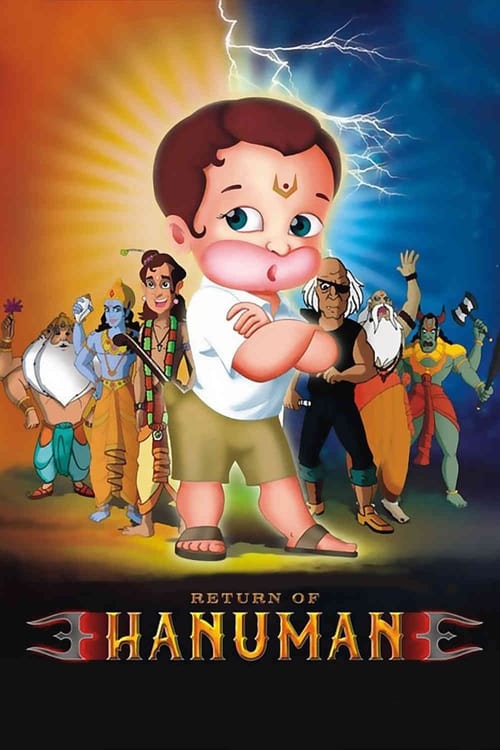
Return Of Hanuman
2007
No user ratings available yet
Representation score: 4.4 out of 10

Representation Score
Fair
2017
Director
Ruchi Narain
Runtime
104 minutes
Average Rating
No ratings yetNew Showbiz Analysis
Hanuman Da Damdaar is a culturally specific animated feature that succeeds in providing a non-Western perspective through its use of Indian mythology. By centering on indigenous frameworks, it offers a departure from the global animation standard. However, the film relies heavily on traditional social structures. The narrative reinforces conventional gender roles and religious morality, centering on a hero's journey that upholds established family hierarchies and divine authority. While the protagonist's growth from fear to bravery is central, the film lacks depth in representing diverse identities, including LGBTQ+ perspectives or nuanced depictions of disability.
Category Breakdown
The story focuses on a singular protagonist and his immediate family. There are no non-binary or LGBTQ+ identities or relationships shown in the narrative.
Gender roles follow a traditional hierarchy. Anjani provides domestic protection and nurturing, while Kesari embodies the warrior archetype and masculine approval.
The film offers a high degree of cultural specificity by centering on Indian mythological figures. This provides a non-Western perspective that deviates from typical Anglo-centric animation norms.
The plot is driven by divine intervention and religious morality. It emphasizes traditional virtues and parental respect, avoiding secular or relativistic viewpoints.
Maruti's journey involves overcoming fear and psychological vulnerability. However, this follows a standard hero's journey cliché rather than offering nuanced portrayals of specific disabilities.
Present on Screen
Limited or Absent
Official Synopsis
Anjani has not forgotten how her son almost lost his life. Now to protect him, she shelters him in abid to keep him from harming himself again. She doesn't even allow him to go out of the house. When his father Senapati Kesari returns from war, he is upset to find that his brave son has become a scared little boy. Maruti feels bad that his father isn't proud of him, and prays to God to make him the bravest kid in the world. God answers his prayers and leads Maruti into a series of jungle adventures. His experiences and new friends lead him to metamorphose from a Bhola-Bhala Bajrangi to HANUMAN DA DAMDAAR!
2007
2015
2005
1997
2013

2011

2013
2016
No reviews yet. Be the first to share your thoughts on this movie!
Use the rating form above to leave a star rating and optional review.