
Sailor Victory
1995
No user ratings available yet
Representation score: 4.7 out of 10
Representation Score
Good
2001
PG-13Director
Mitsuru Hongo
Runtime
85 minutes
Average Rating
No ratings yetNew Showbiz Analysis
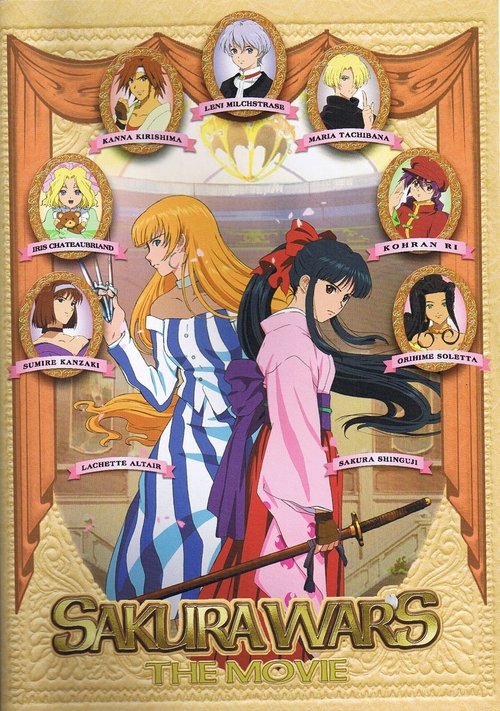
Sakura Wars: The Movie stands out for its subversion of gender hierarchies, placing female characters in positions of systemic military power. The concept of the 'Flower Division' elevates women as the primary protectors of the city, moving beyond traditional archetypes. However, the film remains anchored in traditional structures. It lacks depth in representing different aspects of identity, offering no significant LGBTQ+ representation or meaningful engagement with disability. While it hints at internationalism through its global recruitment, the visual and cultural focus remains largely homogeneous. Ultimately, the film is a genre-driven action piece that prioritizes heroic clichés and state-sanctioned virtue over radical social critique or diverse identity exploration.
Category Breakdown
The film does not include any explicit LGBTQ+ characters or storylines. Romantic and social interactions follow conventional expectations typical of early 2000s animation.
Women play a central role in driving the story, as their spirit and combat skills are crucial. This specialized unit operates independently, challenging the stereotype of male-dominated combatants.
The cast is primarily Japanese, though the recruitment of youths from around the world suggests internationalism. However, the visual execution remains largely homogeneous within its steampunk setting.
The narrative combines industrial modernity with spiritual mysticism. It portrays the defense of the state as a noble endeavor without critiquing traditional institutions.
The film lacks prominent characters dealing with visible or invisible disabilities. The focus remains on the physical and spiritual prowess needed for mecha piloting.
Present on Screen
Limited or Absent
Official Synopsis
Following in the aftermath of a terrible Demon-Human war, turn of the century Japan is preparing a new fighting force in case the demons decide to return. A squadron of giant robots are built to be controlled by the spirit of the pilot, but it is discovered that the only people with sufficient spirit are young women. After recruiting a team of youths from around the world, the Japanese government decides to keep them a secret by disguising them as a theater troupe, thus requiring them to spend as much time memorizing Shakespeare as they do on military training.
1995
2010
1986
1993

1993

2001
2004
1994
No reviews yet. Be the first to share your thoughts on this movie!
Use the rating form above to leave a star rating and optional review.