Find another title
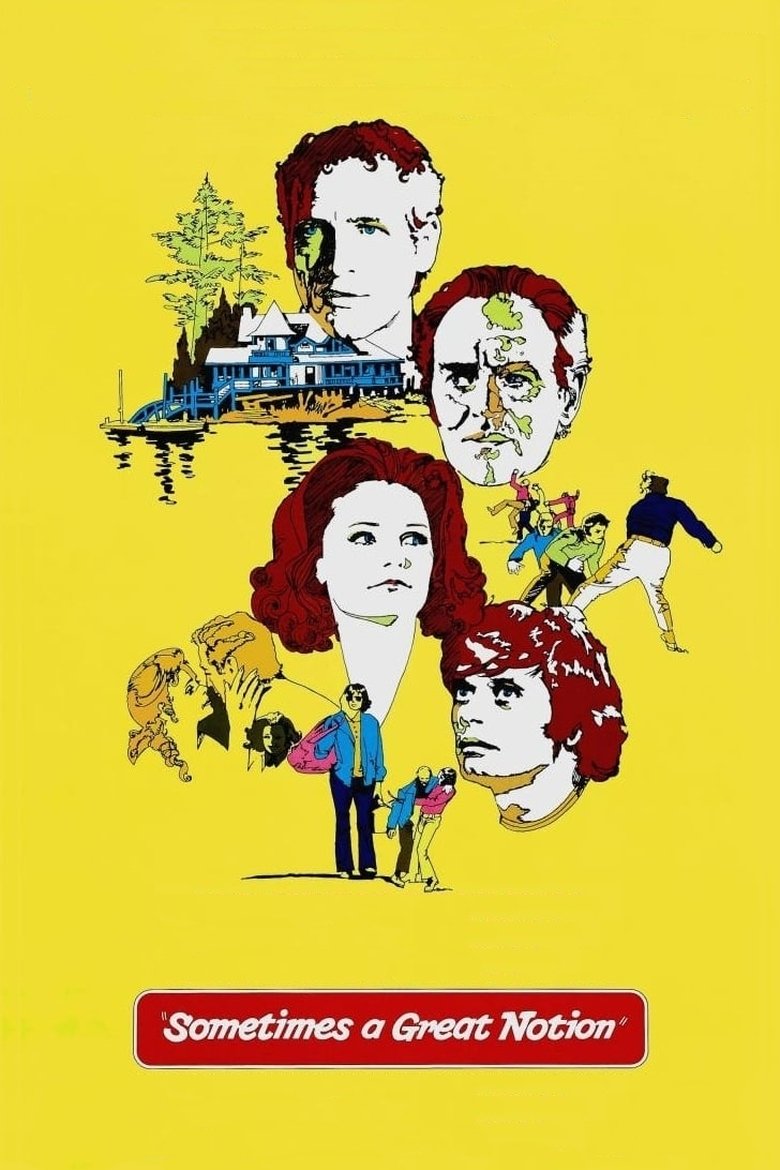
Sometimes a Great Notion
1971
PGDirector
Paul Newman
Runtime
114 minutes
Average Rating
No ratings yetSynopsis
Hank Stamper and his father, Henry, own and operate the family business by cutting and shipping logs in Oregon. The town is furious when they continue working despite the town going broke and the other loggers go on strike ordering the Stampers to stop, however Hank continues to push his family on cutting more trees. Hank's wife wishes he would stop and hopes that they can spend more time together. When Hank's half brother Leland comes to work for them, more trouble starts.
Where to Watch
Diversity & Representation
Overall Score
Limited
Category Breakdown
LGBTQ+ Representation
The film centers on traditional heteronormative family structures and patriarchal lineage. There is no discernible presence of queer subtext or non-cisnormative identities.
Gender Representation
The story explores the tension between rugged masculinity and domestic stability. While women avoid purely submissive tropes, the narrative largely operates within traditional gender hierarchies.
Racial & Ethnic Diversity
The cast is predominantly white, reflecting the demographic homogeneity of the era's settler populations. Native American presence lacks narrative agency or depth within the Eurocentric focus.
Religious & Cultural Diversity
The film offers a sophisticated deconstruction of the American Frontier myth. It critiques Western institutions by framing the law and organized community as adversarial forces to the individual.
Disability Representation
No significant portrayals of physical or neurodivergent disabilities are present in the central narrative.
Strengths
- Provides a sophisticated critique of Western legal and social institutions.
- Offers psychological depth to women navigating male-dominated environments.
- Explores complex themes of individual autonomy versus state authority.
Areas for Improvement
- Lacks representation of LGBTQ+ identities or non-cisnormative characters.
- Features a predominantly white cast with minimal racial diversity.
- Provides no significant portrayals of physical or neurodivergent disabilities.
AI Analysis
Paul Newman’s directorial debut is a character-driven study of individualist willpower clashing with organized society. It excels at deconstructing the American Frontier myth, presenting a complex moral landscape where familial legacy supersedes civic duty. However, the film is limited by the demographic homogeneity of its setting. The narrative lacks intersectional depth, focusing almost exclusively on a white, Anglo-Saxon working-class experience with no representation of LGBTQ+ or disabled identities. While the film provides psychological depth to its female characters, it remains anchored in traditional patriarchal structures and a male-dominated labor environment.
Rate this Movie
Reviews
No reviews yet. Be the first to share your thoughts on this movie!
Use the rating form above to leave a star rating and optional review.