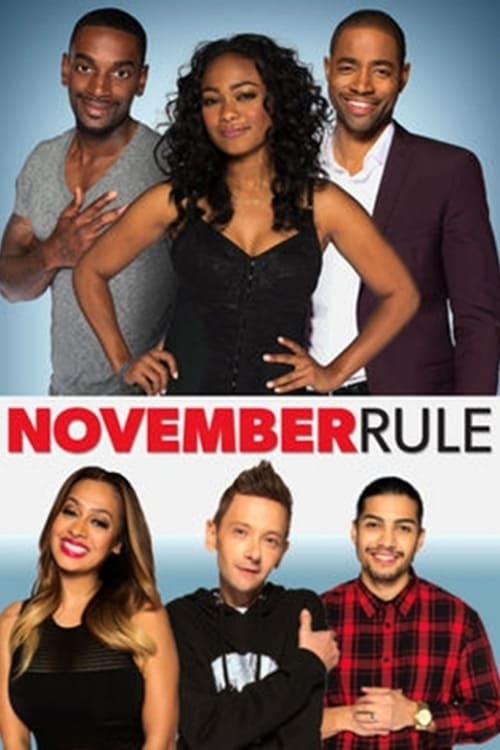
November Rule
2015
No user ratings available yet
Diversity score: 3.0 out of 10

2014
RDirector
Simon Helberg, Jocelyn Towne
Runtime
89 minutes
Average Rating
No ratings yetSynopsis
Quinn, a neurotic man, is diagnosed with a harmless eye condition and soon after his life spirals out of control. He second-guesses his plans to propose to his longtime girlfriend, Devon, after his beautiful coworker, Kelsey, confesses that she has a crush on him. After a conversation with his best friend, Jameson, he clumsily tries to explain his doubts to Devon, but his possible proposal turns into a break-up. When Devon flees to Paris, he follows her in a last-ditch effort to win back "the one."
Overall Score
Limited
Category Breakdown
LGBTQ+ Representation
The film follows a strictly heteronormative trajectory. The central conflict relies on a traditional romantic triangle between a male lead and two women.
Gender Representation
The story adheres to established romantic comedy archetypes. While the male lead is neurotic, the narrative remains centered on male indecision and female reactions.
Racial & Ethnic Diversity
The production features a predominantly white, Anglo-Saxon cast. Paris serves as a romantic backdrop rather than a space for multicultural exploration.
Religious & Cultural Diversity
This is a conventional Western romantic comedy. It prioritizes individual romantic fulfillment and the 'grand gesture' over any critique of systemic institutions.
Disability Representation
A harmless eye condition serves as a narrative device to trigger a psychological crisis. It functions more as a plot convenience than a meaningful exploration of disability.
Strengths
Areas for Improvement
AI Analysis
We'll Never Have Paris operates within a traditionalist framework, leaning heavily on standard romantic comedy tropes. The narrative architecture reinforces established social norms rather than challenging them, resulting in a homogeneous demographic profile. The film lacks intersectional depth, focusing on a conventional romantic pursuit. It relies on a white-centric cast and a heteronormative structure that avoids any subversion of gendered power dynamics or non-cisnormative identities. Ultimately, the production prioritizes genre expectations over social critique. Even the medical element in the plot serves as a mere catalyst for character instability rather than a nuanced portrayal of neurodivergence or physical disability.
2015
2012

2011
2015

2012

2004

2004
2014
2005
2013
2013
2002
No reviews yet. Be the first to share your thoughts on this movie!
Use the rating form above to leave a star rating and optional review.