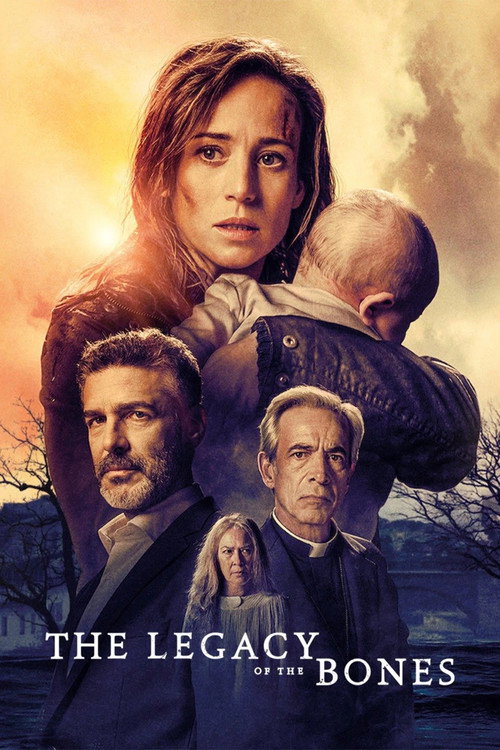
The Legacy of the Bones
2019
No user ratings available yet
Representation score: 5.5 out of 10

Representation Score
Fair
2017
Director
Fernando González Molina
Runtime
129 minutes
Average Rating
No ratings yetNew Showbiz Analysis
The film excels as a character study that challenges traditional masculine thriller clichés by placing a woman at the center of a high-stakes investigation. Inspector Amaia Salazar's professional role and personal history provide a nuanced perspective that goes beyond typical genre conventions. However, the film lacks broader multi-layered depth. Its narrative is heavily focused on regional Basque identity and psychological suspense, limiting its scope for diverse demographic representation or explicit LGBTQ+ storylines. Overall, the work is a culturally specific piece that prioritizes atmospheric tension and regional heritage over a broad social critique.
Category Breakdown
The film centers on a criminal investigation and the protagonist's psychological trauma. There are no visible LGBTQ+ character arcs or critiques of the assumption that everyone is straight or cisgender.
Inspector Amaia Salazar drives a high-stakes investigation, challenging traditional masculine leadership clichés common in thrillers.
The film is deeply rooted in the Basque Country's ethnic landscape, using local identity as a foundational element rather than a shallowly inclusive one.
The story explores the tension between ancient Basque mythology and modern secular investigation, examining the clash between traditional superstition and contemporary institutions.
There is no discernible evidence regarding the portrayal of physical or neurodivergent disabilities within the provided narrative description.
Present on Screen
Limited or Absent
Official Synopsis
When the naked body of a teenage girl is found on the banks of the River Baztán, it is quickly linked to a similar murder one month before. Soon, rumours are flying in the nearby village of Elizondo. Is this the work of a ritualistic killer or is it the basajaun, the ‘invisible guardian’ of Basque mythology? Inspector Amaia Salazar leads the investigation, taking her back to the heart of the Basque country where she was born, and where she hoped never to return. Shrouded in mist and surrounded by impenetrable forests, it is a place of unresolved conflicts and a terrible secret from Amaia’s childhood that will come back to haunt her. Faced with the superstitions of the village, Amaia must fight the demons of her past to confront the reality of a serial killer on the loose. But as she is drawn deeper into the investigation, she feels the presence of something darker lurking in the shadows…
2019
2010
2017

2016

2023
2018
2020
2018
No reviews yet. Be the first to share your thoughts on this movie!
Use the rating form above to leave a star rating and optional review.