
Kursk
2018
No user ratings available yet
Representation score: 5.1 out of 10
Representation Score
Minimal
2016
PG-13Director
Craig Gillespie
Runtime
117 minutes
Average Rating
No ratings yetNew Showbiz Analysis
The film functions as a conventional historical drama that prioritizes period-accurate social compositions over diverse representation. By focusing on mid-20th-century maritime heroism, the narrative relies on traditional archetypes and established social hierarchies. While the film achieves historical realism for its 1952 setting, it lacks the diversity required to challenge or expand upon the era's demographic norms. The storytelling centers on masculine competence and institutional duty, leaving little room for underrepresented voices or non-traditional identities.
Category Breakdown
The film adheres to a strictly heterosexual and cisgender framework. There is no presence of queer subtext or non-cisgender identities within the 1952 setting.
Men play a central role in driving the plot through Coast Guard leadership. Women remain largely relegated to domestic spheres or reactive emotional roles on the shore.
The cast reflects the demographic homogeneity of mid-century New England. It presents a predominantly white ensemble without diverse ethnic perspectives.
The narrative celebrates traditional Western values like duty and institutional respect. It focuses on maritime authority rather than deconstructing societal roles.
The story does not feature characters with visible or invisible disabilities. Disability is not utilized as a central plot device or narrative arc.
Present on Screen
Limited or Absent
Official Synopsis
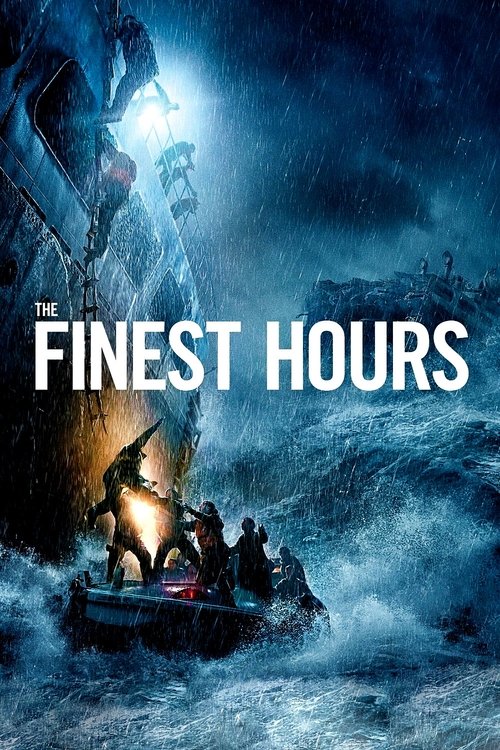
The Coast Guard makes a daring rescue attempt off the coast of Cape Cod after a pair of oil tankers are destroyed during a blizzard in 1952.
2018
1955

2017
1958

2000

1975

2015

2013
No reviews yet. Be the first to share your thoughts on this movie!
Use the rating form above to leave a star rating and optional review.