Find another title
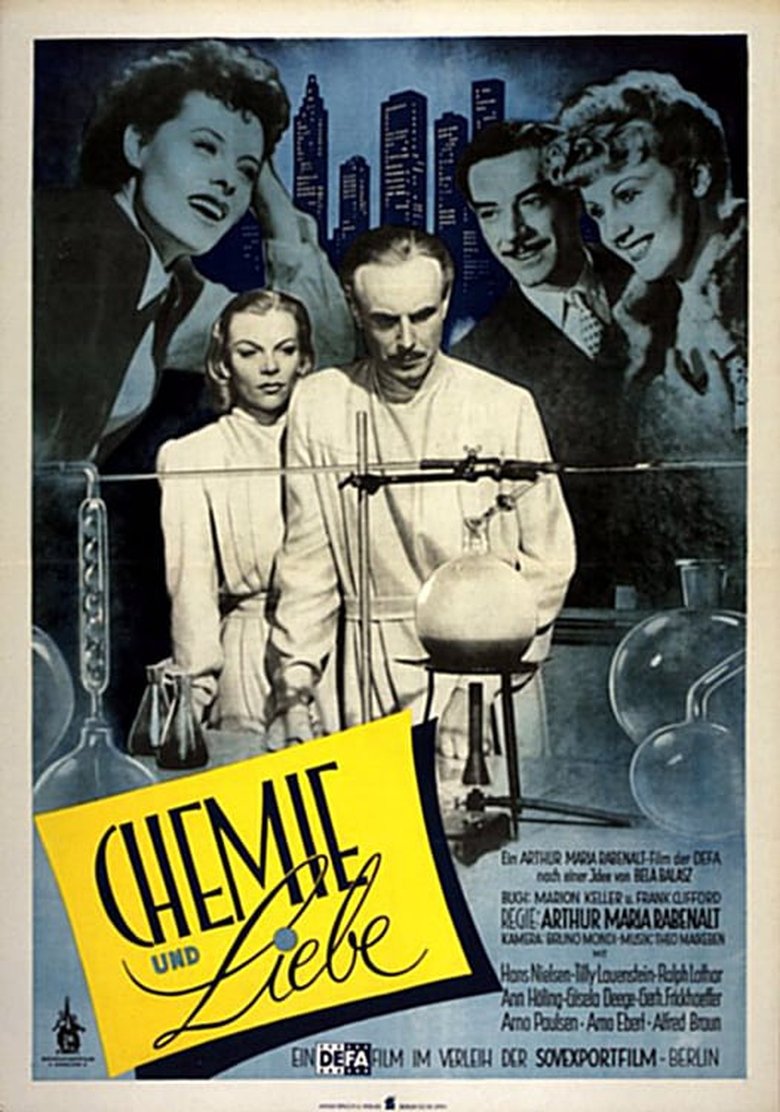
Chemistry and Love
1948
Director
Arthur Maria Rabenalt
Runtime
98 minutes
Average Rating
No ratings yetSynopsis
A chemist and his assistant make a groundbreaking discovery. They manage to make butter directly from pasture grass without having to deal with either the cow or the use of dairy products. An industrialist attempts to seize the invention.
Where to Watch
Diversity & Representation
Overall Score
Limited
Category Breakdown
LGBTQ+ Representation
The film lacks any evidence of non-cisnormative identities or same-sex intimacy. It follows a traditional romantic structure typical of 1948 cinema.
Gender Representation
A male chemist leads the scientific discovery, while a female assistant occupies a secondary role. This setup reinforces conventional gender hierarchies of the era.
Racial & Ethnic Diversity
The cast appears homogeneous, reflecting the demographic norms of post-war Germany. There is no indication of a multicultural ensemble or diverse casting.
Religious & Cultural Diversity
The story focuses on scientific progress and industrial conflict. While it critiques capitalist greed, it remains rooted in mid-century technological optimism.
Disability Representation
There is no mention of characters with visible or invisible disabilities within the narrative.
Strengths
- The film provides a clear critique of capitalist greed through the conflict with an industrialist.
- It explores themes of scientific advancement and technological progress relevant to its era.
Areas for Improvement
- The narrative relies on traditional gender hierarchies, limiting female agency to assistant roles.
- The cast and setting lack racial and ethnic diversity, reflecting a homogeneous demographic.
- There is no representation of LGBTQ+ identities or characters with disabilities.
AI Analysis
Chemistry and Love is a period-typical genre piece that adheres to the social and cinematic frameworks of 1948. The narrative relies on established tropes of scientific discovery and industrial rivalry rather than attempting to disrupt social hierarchies. The film's structure is centered on a male-driven scientific breakthrough, which limits the agency of female characters to supporting roles. This reflects the traditional gender roles and demographic homogeneity common in mid-20th-century European commercial cinema. Ultimately, the film functions as escapist entertainment. It lacks the intentionality required to represent diverse identities or challenge the status quo, focusing instead on a standard romantic and scientific adventure.
Rate this Movie
Reviews
No reviews yet. Be the first to share your thoughts on this movie!
Use the rating form above to leave a star rating and optional review.