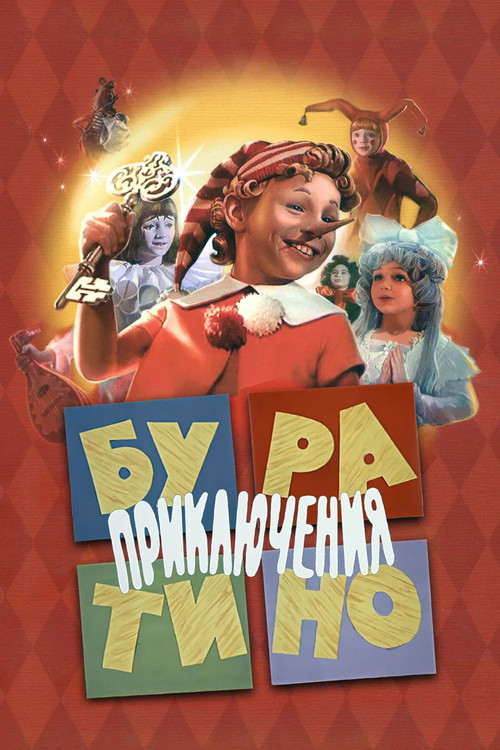
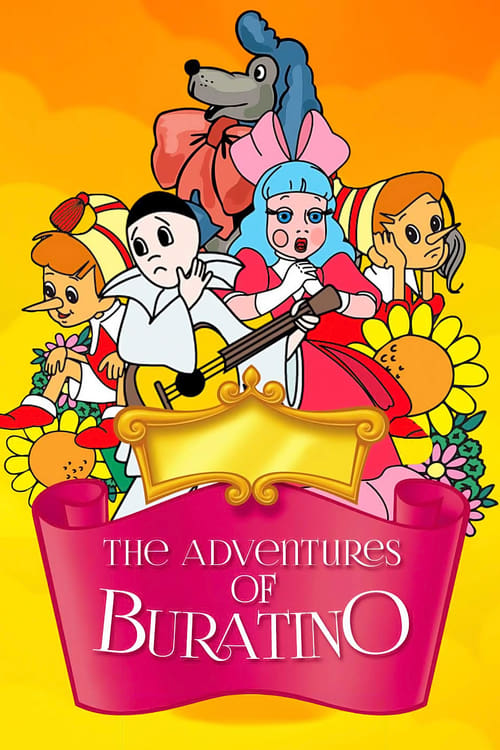
The Adventures of Buratino
1976
No user ratings available yet
Representation score: 3.1 out of 10
Representation Score
Limited
1959
Director
Ivan Ivanov-Vano, Dmitriy Babichenko
Runtime
68 minutes
Average Rating
No ratings yetNew Showbiz Analysis
The film is a classic example of mid-20th-century traditionalist animation. It prioritizes didactic storytelling and established fairy-tale clichés over the exploration of complex identity politics or diverse representation. The narrative structure reinforces moral archetypes. While characters have distinct personalities, they function as symbols within a stable, moralistic framework rather than nuanced social explorations. Ultimately, the work lacks the intentionality required to disrupt conventional social hierarchies, serving instead as a stable adventure rooted in traditional storytelling.
Category Breakdown
The film adheres to a traditional structure that assumes everyone is straight or cisgender. It doesn't include any depictions of non-traditional gender identities or same-sex relationships, focusing instead on typical moral symbols.
Female characters such as Tortila the Tortoise play important roles and play a significant role in driving the story. However, they primarily fill maternal or supportive roles within traditional fairy-tale gender dynamics.
The setting features anthropomorphic animals and puppets in a stylized world. This setup prevents traditional racial representation, maintaining a homogeneous, folkloric atmosphere throughout.
The story operates within a mid-20th century Soviet moralistic framework. It uses binary good-versus-evil storytelling rather than exploring complex systemic critiques or postmodern moral relativism.
The narrative lacks focus on neurodivergence or physical disabilities. Characters are defined by their roles in the quest for the Golden Key rather than lived experiences of disability.
Present on Screen
Limited or Absent
Official Synopsis
A wooden boy Buratino tries to find his place in life. He befriends toys from a toy theater owned by evil Karabas-Barabas, gets tricked by Alice the Fox and Basilio the Cat and finally discovers the mystery of a golden key given to him by kind Tortila the Tortoise.
No reviews yet. Be the first to share your thoughts on this movie!
Use the rating form above to leave a star rating and optional review.