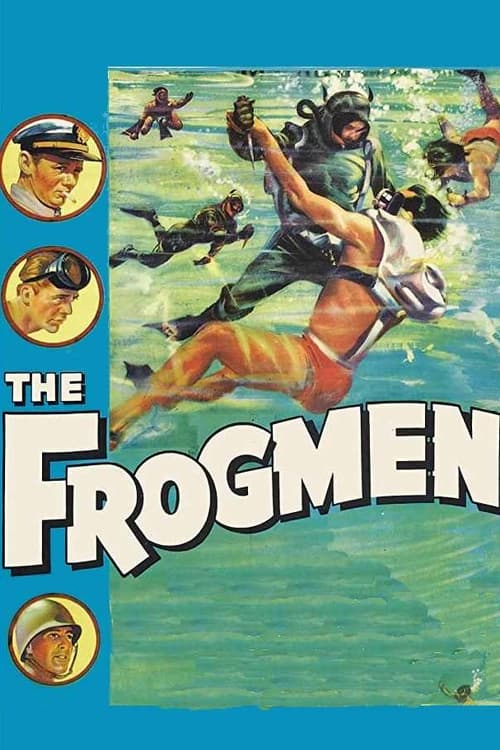
The Frogmen
1951
No user ratings available yet
Diversity score: 0.9 out of 10

1960
NRDirector
Hall Bartlett
Runtime
83 minutes
Average Rating
No ratings yetSynopsis
During the Korean War, the lieutenant in charge of a Marine rifle platoon is killed in battle. Before he dies, he places the platoon's sergeant, who's black, in charge. The sergeant figures on having trouble with two men in his platoon: a private who has much more combat experience than he does, and a racist Southerner who doesn't like blacks in the first place and has no intention of taking orders from one.
Overall Score
Fair
Category Breakdown
LGBTQ+ Representation
The film lacks LGBTQ+ characters or non-heteronormative identities. The narrative focuses strictly on racial and hierarchical tensions within the Korean War setting.
Gender Representation
The story adheres to 1960s gender hierarchies, driven almost exclusively by male protagonists. Female characters serve as secondary social backdrop rather than active plot agents.
Racial & Ethnic Diversity
The film centers a Black sergeant in a leadership role, challenging mid-century racial hierarchies. It examines the systemic friction and psychological burdens of leading a prejudiced platoon.
Religious & Cultural Diversity
The narrative deconstructs idealized American unity by exposing internal fractures caused by racial inequality. It contrasts communal prejudice against the individual morality of the protagonist.
Disability Representation
There is no evidence of characters with visible or invisible disabilities serving as central plot devices or possessing specific agency.
Strengths
Areas for Improvement
AI Analysis
All the Young Men stands out for its progressive handling of racial agency during a period of significant cinematic conformity. By placing a Black sergeant in command of a white platoon, the film moves beyond tokenism to critique systemic prejudice and the breakdown of institutional authority. However, the film remains a product of its era, characterized by a lack of LGBTQ+ representation and a heavy reliance on traditional masculine power dynamics. The narrative is almost entirely male-centric, leaving female characters with minimal agency. Ultimately, the film's strength lies in its willingness to use a military setting to interrogate the friction between individual merit and ingrained social bias.
No reviews yet. Be the first to share your thoughts on this movie!
Use the rating form above to leave a star rating and optional review.