Silent Night Deadly Night 4: Initiation
1990
No user ratings available yet
Diversity score: 2.4 out of 10
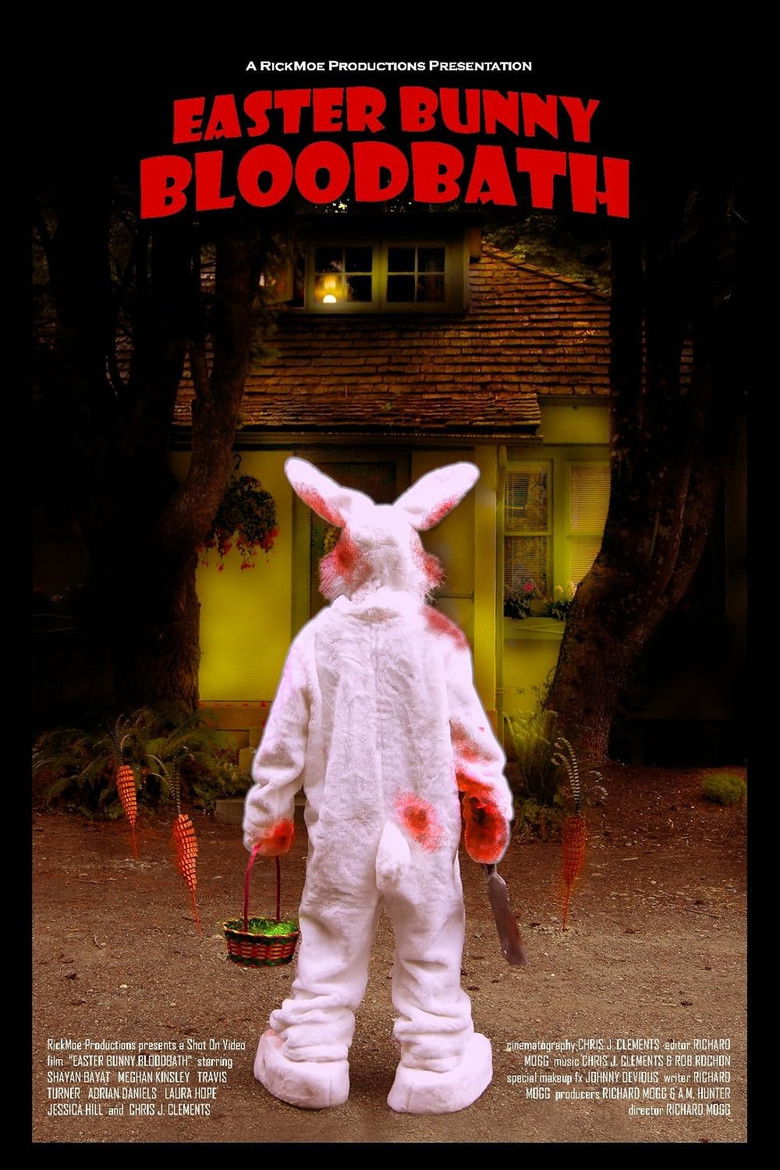
2011
UnratedDirector
Richard Mogg
Runtime
80 minutes
Average Rating
No ratings yetSynopsis
In 1967, Peter McKay watched as his father decapitated his sister on Easter morning. Peter never celebrated the holiday again... until now - today - in 1987. In an isolated cabin deep in the woods, Peter and his five friends will fall prey to a killer with a bloody ax to grind. A killer dressed as the Easter Bunny.
Overall Score
Limited
Category Breakdown
LGBTQ+ Representation
The film lacks any evidence of non-cisnormative identities or same-sex intimacy. The narrative focuses on a traditional, albeit violent, familial structure.
Gender Representation
The story centers on a male protagonist and antagonist. While a female character is a victim in the inciting incident, there is no indication of female agency or subverted hierarchies.
Racial & Ethnic Diversity
The setting and character names suggest a homogeneous Western cast. There is no indication of racial blending or non-white majority casting within the narrative.
Religious & Cultural Diversity
The film deconstructs Western cultural symbols by turning the Easter holiday into a site of carnage. This serves genre subversion rather than a systemic critique of religion.
Disability Representation
There is no mention of neurodivergence or physical disability. While the protagonist faces psychological trauma, it appears to function as a standard horror trope.
Strengths
Areas for Improvement
AI Analysis
Easter Bunny Bloodbath is a conventional slasher that relies heavily on established genre tropes. The narrative focuses on a cycle of familial violence and individual trauma rather than exploring diverse identities or systemic social dynamics. The film's primary engagement with culture is the aesthetic subversion of a religious holiday. This disruption of tradition serves the horror atmosphere but does not extend into a broader critique of social or religious institutions. Ultimately, the production lacks intersectional representation. It operates within a monolithic framework that prioritizes traditional Western archetypes and a homogeneous cast.
1990
1987
2000
2011
2014
2011
2000
1981
2020
2006
1987
2021
No reviews yet. Be the first to share your thoughts on this movie!
Use the rating form above to leave a star rating and optional review.