Find another title
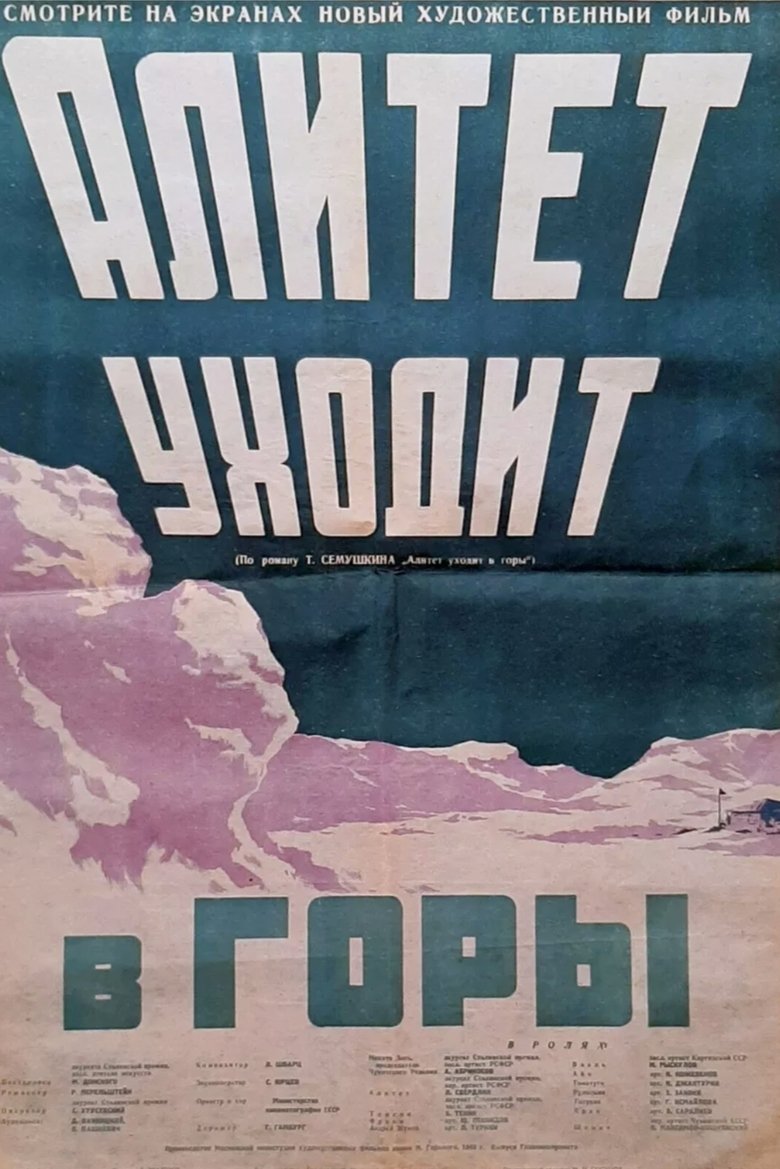
Alitet Leaves for the Hills
1949
Director
Mark Donskoy
Runtime
95 minutes
Average Rating
No ratings yetSynopsis
The inhabitants of Chukotka are shown to be cruelly exploited before the revolution. Once Chukotka is visited by the representative of the Kamchatka Revolutionary Committee, Los, and the ethnographer Zhukov. The news of the arrival of the Russians immediately disperses along the coast. Contrary to the pressure of the American Thomson and the local "oligarch" Alitet in Chukotka, fair trade laws are established, as a result of which the Americans and Alitet leave Chukotka.
Where to Watch
Diversity & Representation
Overall Score
Good
Category Breakdown
LGBTQ+ Representation
The film focuses on socio-political restructuring and communal survival. There is no presence of non-cisnormative identities or same-sex intimacy.
Gender Representation
The narrative prioritizes collective agency over traditional domestic roles. However, it lacks specific subversions of masculinity or female intellectual dominance.
Racial & Ethnic Diversity
The story centers on indigenous populations in Chukotka. It depicts these communities reclaiming agency against foreign exploitation and local oligarchs.
Religious & Cultural Diversity
The film celebrates the dismantling of Western commercial interests in favor of a collective model. It prioritizes secular, communal organization over religious influence.
Disability Representation
Characters navigate a landscape of survival and poverty. While no specific disabilities are identified, the film highlights the struggles of the displaced.
Strengths
- Strong representation of indigenous populations reclaiming agency.
- Effective critique of Western capitalist and imperialist exploitation.
- Celebrates collective survival and secular, communal organization.
Areas for Improvement
- Complete absence of LGBTQ+ or non-cisnormative identities.
- Lacks specific subversions of gender hierarchies or intellectual dominance.
- Does not address specific disability identities beyond socioeconomic struggle.
AI Analysis
Mark Donskoy’s film is a powerful critique of Western capitalist hegemony. It succeeds by centering indigenous agency and framing the struggle against colonial-style exploitation through a collectivist lens. The narrative effectively disrupts the 'Western-as-norm' trope by portraying foreign interests as corrupt. This provides a robust cultural and ethnic perspective that challenges traditional global power dynamics. However, the film remains limited by its era's focus. It lacks modern LGBTQ+ representation and specific depictions of disability or neurodivergence, focusing instead on class and systemic political shifts.
Rate this Movie
Reviews
No reviews yet. Be the first to share your thoughts on this movie!
Use the rating form above to leave a star rating and optional review.