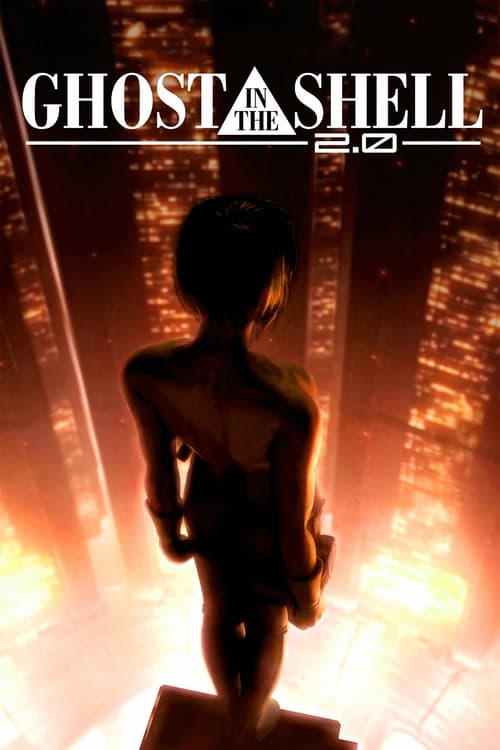
Ghost in the Shell 2.0
2008
No user ratings available yet
Representation score: 9.2 out of 10

Representation Score
Excellent
2013
TV-MADirector
Masahiko Murata, Kazuchika Kise
Runtime
58 minutes
Average Rating
No ratings yetNew Showbiz Analysis
The film stands out for its subversion of traditional power structures, especially around gender. Motoko Kusanagi is portrayed as a highly competent leader whose authority comes from technical expertise rather than social roles. Despite its culturally specific setting and lack of explicit LGBTQ+ or multi-ethnic narratives, the movie provides a sophisticated critique of institutional control. It redefines human identity through the lens of technological integration. Overall, the film's intellectual depth is its greatest strength, as it delves into how altered bodies and digital consciousness challenge traditional notions of personhood.
Category Breakdown
The film does not explicitly include LGBTQ+ identities or same-sex relationships. Instead, it explores identity through the idea of digital versus biological consciousness.
Motoko Kusanagi challenges traditional gender roles by being the main driver of the plot. She is highly intelligent and physically capable, commanding respect without falling into submissive stereotypes.
The cast is mostly made up of East Asian actors, reflecting a Japanese socio-political context. While it avoids whitewashing, it doesn't use diverse casting to challenge ethnic uniformity.
The story critiques corporate control and state dominance through a modern lens. It focuses on the concept of a 'Ghost' as a soul within a machine.
Disability is explored through cybernetic enhancements and digital-neurological integration. Characters with high ability to act navigate society, using 'Ghost Pain' as a metaphor for new psychological conditions.
Present on Screen
Limited or Absent
Official Synopsis
The story is set in 2027, one year after the end of the fourth non-nuclear war. New Port City is still reeling from the war's aftermath when it suffers a bombing caused by a self-propelled mine. Then, a military member implicated in arms-dealing bribes is gunned down. During the investigation, Public Security Section's Daisuke Aramaki encounters Motoko Kusanagi, the cyborg, wizard-level hacker assigned to the military's 501st Secret Unit. Batou, a man with the "eye that does not sleep," suspects that Kusanagi is the one behind the bombing. The Niihama Prefectural Police detective Togusa is pursuing his own dual cases of the shooting death and a prostitute's murder. Motoko herself is being watched by the 501st Secret Unit's head Kurutsu and cyborg agents.
2008

2013
2007
2014

2015
2005
2017
2014
No reviews yet. Be the first to share your thoughts on this movie!
Use the rating form above to leave a star rating and optional review.