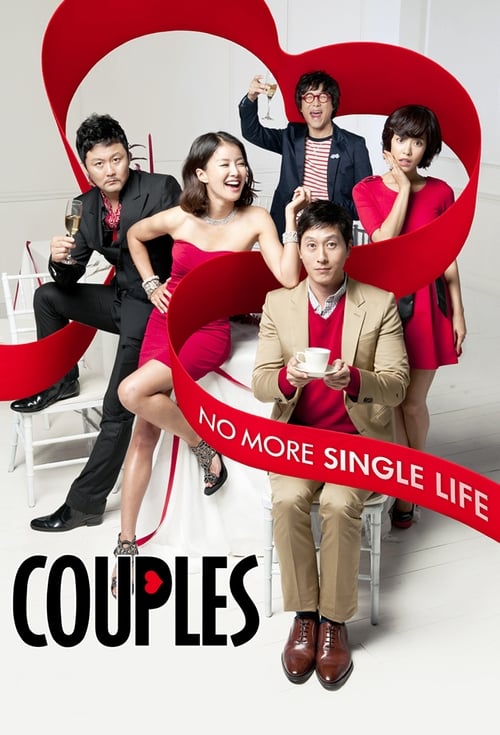
Couples
2011
No user ratings available yet
Diversity score: 2.9 out of 10

2013
Not RatedDirector
Roh Deok
Runtime
112 minutes
Average Rating
No ratings yetSynopsis
After a trivial quarrel, co-workers Dong-hee and Young decide to take a break from their relationship. But they realise that they still love each other as their attempts to find new partners fail.
Overall Score
Limited
Category Breakdown
LGBTQ+ Representation
The film centers on a heteronormative romantic dyad. It lacks non-cisnormative identities or narratives that critique heteronormativity, focusing instead on interpersonal friction.
Gender Representation
The film avoids idealized archetypes, presenting an egalitarian dynamic. The female lead, Young, maintains significant emotional autonomy and agency throughout the relationship's shifts.
Racial & Ethnic Diversity
As a localized South Korean production, the cast is ethnically homogeneous. The narrative maintains a culturally specific, singular demographic focus without exploring diverse racial identities.
Religious & Cultural Diversity
The story operates within a secular, urban South Korean framework. It prioritizes emotional realism over religious morality or critiques of traditional institutions.
Disability Representation
There is no discernible representation of physical, sensory, or neurodivergent disabilities. The characters are portrayed within a standard spectrum of able-bodiedness.
Strengths
Areas for Improvement
AI Analysis
Roh Deok’s film excels at subverting romantic tropes through grounded, non-hierarchical gender dynamics. By eschewing the 'perfect partner' archetype, the film achieves a rare level of emotional realism and character autonomy. However, the work remains strictly within conventional social structures. The narrative lacks intersectional breadth, offering almost no representation of LGBTQ+ identities, racial diversity, or disability. Ultimately, the film is a study of micro-sociology within a specific cultural context. While it succeeds in its domestic realism, its demographic focus is narrow and traditional.
2011

2012

2004

2015
2010
2014

2009

2010
2013

2010

2003

2007
No reviews yet. Be the first to share your thoughts on this movie!
Use the rating form above to leave a star rating and optional review.